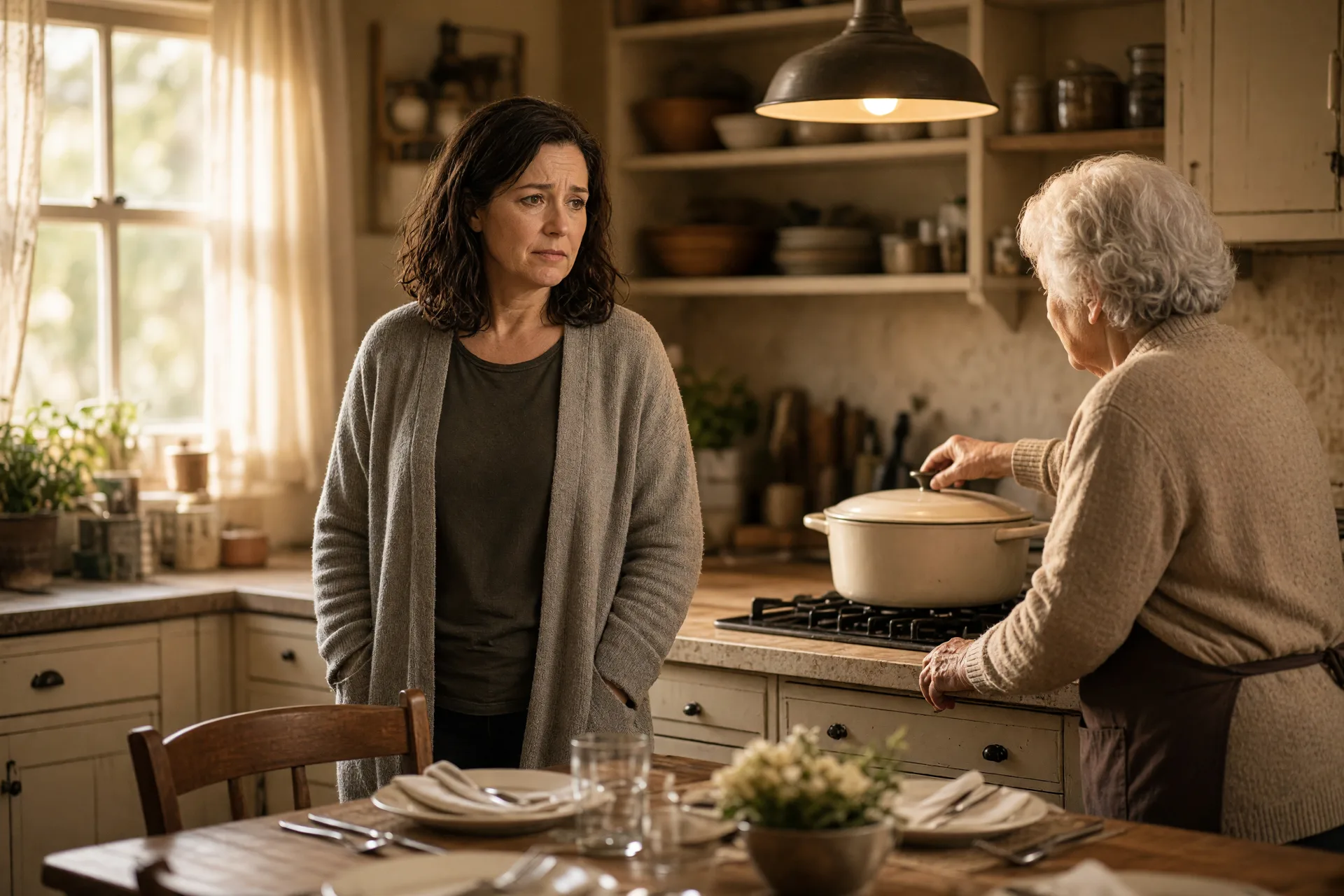
A grown child's guide to starting the senior transition conversation, and the real options that keep Mom in control.
You noticed it at the holiday table, and now you are trying to decide whether to say it out loud. The answer is yes, gently, on your own timeline. Here is how to start, and the real options that keep Mom in control.
The short answer
The house smells like turkey and cinnamon, the good china is out, and everyone is laughing. And then I see Mom grip the counter to stand up, wait a beat, and let my sister carry the platter she has carried herself for thirty Thanksgivings.
The Thanksgiving moment
The house smells like turkey and cinnamon, the good china is out, and everyone is laughing. And then I see Mom grip the counter to stand up, wait a beat, and let my sister carry the platter she has carried herself for thirty Thanksgivings. That is the moment. Not a fall, not a crisis, just a pause that said more than all the laughter did.
It was never one thing. It was the mail stacking up on the side table, the dent in the garage door nobody remembers making, the way she lets me fill the car with groceries now instead of arguing like she used to. The way she laughs when I notice, and then changes the subject. I watched all of it through dinner and said nothing, because saying it out loud makes it real, and I am not sure I am ready for it to be real.
The honest question
The honest question is not whether Mom needs more help. In most families that answer is already written, quietly, in the pattern of small things. The honest question is whether we say it out loud as a family, on our own timeline, while Mom can still sit in the room and shape the answer. Because the alternative, ignoring it and hoping next Thanksgiving is somehow different, does not make the problem smaller. It just moves the decision to a moment when no one has time to think.
Before anyone decides anything, it helps to see which questions other families actually ask first. The Ask Steve senior transition library walks through the earliest ones in plain language, from recognizing the signs to having the first conversation, so you are not starting from silence. The goal of this stage is not a decision. It is a door, opened gently, that Mom knows she did not have to face alone.

Three conversations worth having
Nobody sits Mom down and delivers a lecture. That is not a conversation, and it will not work. What actually moves a family is three quiet, separate conversations, taken one at a time, none of them about forcing a move. If you want an order that tends to hold up, it is this: safety first, money second, and the house third.
Safety comes first, because it is about Mom, not about what she can or cannot manage. Has she fallen, or come close? Are the stairs getting harder and the stove left on longer than it used to be? Is driving starting to feel uncertain to her, even if she would never say it? You are not asking to corner her. You are asking so the family knows what is real before a fall decides for everyone.
Money is the second conversation, and it is usually the hardest because it feels like prying. You are not doing math at her. You are asking what her income and savings actually need to support, because that is what keeps every option open later. Who pays the utilities, the insurance, the property tax? Is the mortgage still rolling or paid off? A clear, gentle picture of the numbers, built over a few weeks, is what turns fear into options.
The house comes last. Not what it is worth yet, that is a different conversation for a different day. First, what the house is asking of Mom. A family home with stairs and a big yard is a real job at seventy-eight, and the honest question is whether the house still serves her or she is now serving it.
What the options actually are
Here is the good news, and I mean it sincerely: there is no single ending waiting at the bottom of this conversation. There is a real spectrum of paths, and almost all of them keep Mom in her own life and in control. The Lockhart Method is decision-first: name the options, understand the tradeoffs, protect the goal, and let the strategy follow the person, not the other way around.
Staying in place with support. This is not a failure and not a decision to feel guilty about. It means bringing help to the house: care visits, meals, rides, a railing on the stairs, a fall alert. It keeps the life Mom built, and it often costs less than people assume. The honest tradeoff is that the house itself still needs care, and the support rarely shrinks over time.
Rightsizing, which is the gentler word for a smaller, more manageable home or condo in the same part of the valley. One level, less yard, closer to family or care. It is not a demotion. It is a house sized to the life she actually has now, and it is where a lot of families find room to breathe.
Selling, either to unlock equity and move the money to where it does the most good, or because maintaining the family home no longer makes sense. If the decision is about the numbers and not just the house, you can lay the selling options side by side in the seller decision room and compare a traditional sale against a cash offer before a single sign goes in the yard.
Or moving to a 55-plus community, which is genuinely misunderstood. Places like Sun City Summerlin and Sun City Anthem are not waiting rooms. They are active neighborhoods with clubs, pickleball, single-level homes, and neighbors at the same stage of life, and they are often the option that surprises the whole family by being genuinely wanted. If that route interests you, the 55-plus living guide lays out what the lifestyle actually is.
Whatever the path, the deeper transition thinking lives in the senior home transition hub, with the broader life-changes library in the transitions section, where the decision-support behind the options is explained the same way it would be in a strategy conversation.
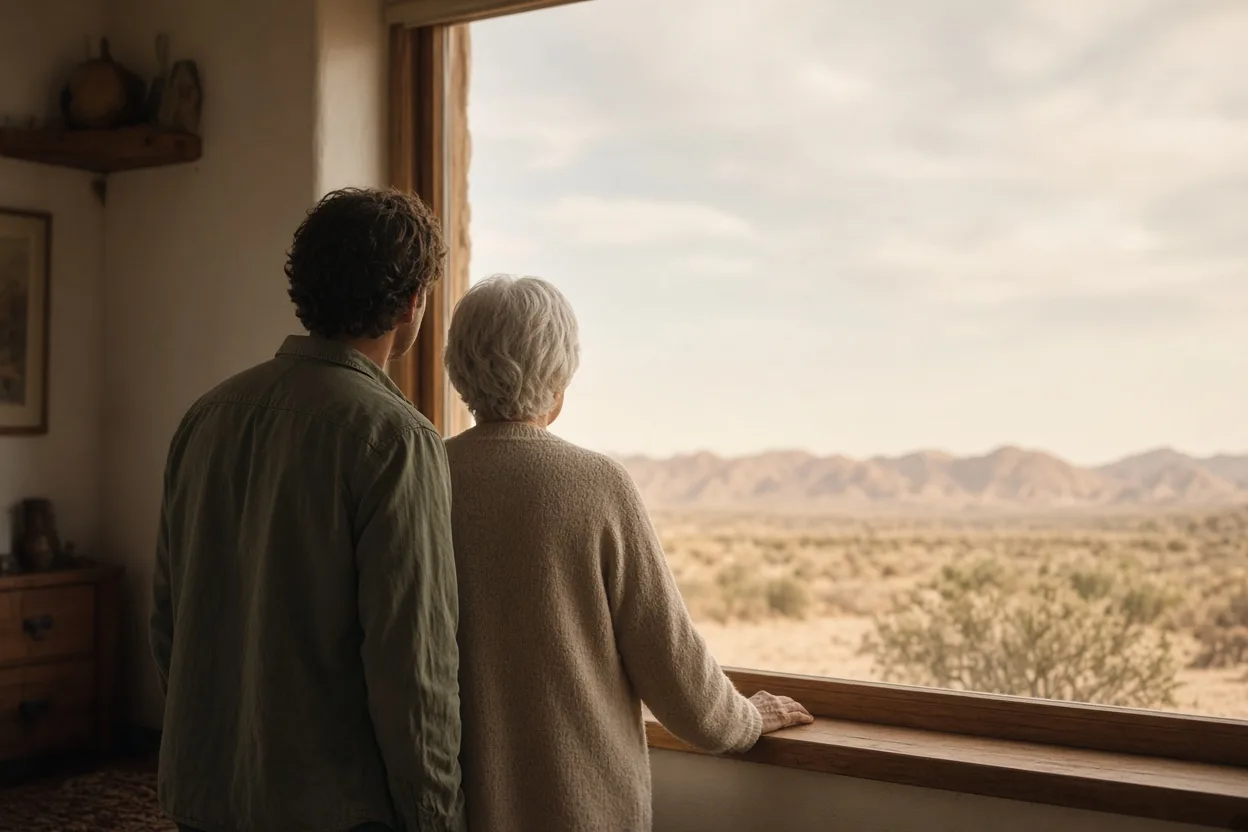
Questions to ask before anyone decides anything
Before the family settles on a path, put these on the table and answer them together. Not as a grilling. As a shared checklist, so the decision belongs to everyone, and to Mom first.
-
What does Mom actually want, and what is she most afraid of losing?
-
What does each sibling observe, and where do those observations agree?
-
Who handles what: the calls, the appointments, the accounts, the coordination?
-
What does the current financial picture actually support, not what does it feel like it should?
-
What would the house cost to keep up in a year if nothing changes?
-
Is the paperwork current, the durable power of attorney included, and who holds it?
Why Mom should stay in the decision
The single most important thing I tell families in this spot is counterintuitive: do not take the decision away from Mom to make it easier. When a parent is moved through rather than included, there is a loss that no move can undo. The Lockhart Method is built on the belief that the client is the hero of the story, and that is never more true than here. Mom's voice is the strategy's anchor, even when the family is carrying the weight.
Keeping her in control does not mean waiting for her perfect blessing. It means giving her the same thing you would want: the facts, the options, the people she trusts, and time to land on something she chose rather than something that happened to her. Decision-first thinking exists exactly for this, to turn a frightening transition into a considered choice, made with her, not around her.

How to talk with Steve
I am a Las Vegas Realtor and real estate strategist at First Mutual Realty Group, Nevada license S.0194053, and I work squarely on the property side of this transition. When the house question is the one keeping you up, we start with the number: see what the home is worth opens instantly, with no pressure, and gives you a real value step before anyone decides anything. You can also read the current market picture or the Home Value and Equity page whenever you want a grounded view.
The property work is strongest when the right professionals sit around the table, and when the family needs a lender, an attorney, or a specialist, I work within a trusted network of professionals I can point you to. Not as a referral fee, only because good partners make better outcomes.
When you are ready, the simplest next step is a quiet conversation. Reach out through the contact page and tell me what you saw this Thanksgiving, and we will look at the options together, at Mom's pace, with no pressure and nothing to sign. That is the whole point. The decision deserves to be made well, and you do not have to make it alone. You may also want the free Las Vegas seller's guide as a downloadable starting point for the property side of things.
Frequently Asked Questions
How do I start the senior transition conversation without upsetting Mom?
Start in a calm moment, one on one, and begin with her life rather than your worry. Ask how she is feeling about the house, what is getting harder, and what would make her days easier, then listen. The first conversation is about opening a door, not closing a deal, and keeping Mom in the decision is what this approach is built around.
When should the family act instead of wait?
Act when safety is the issue: a fall, a missed medication, a stove left on, confusion about bills, or a care professional saying the situation is no longer safe. Outside a crisis, act when the pattern of small signs is unmistakable, because starting early is what keeps the decision on the family's timeline.
What are the real options beyond moving to a care facility?
The best families usually weigh four real paths: staying in place with support services, rightsizing to a smaller and more manageable home, selling to unlock equity or reduce carrying costs, and moving to a 55-plus community such as Sun City Summerlin or Sun City Anthem. None of them needs to feel like a verdict, and most keep Mom in control of the choice.
What can Steve Lockhart do to help in a senior transition?
I am a Las Vegas Realtor and real estate strategist with First Mutual Realty Group, Nevada license S.0194053. I handle the property side of the transition: the home value and equity, the decision to sell, rent, renovate, or hold, preparing the house, and coordinating with the legal, financial, and care professionals the family needs. I do not provide medical or legal advice, and I will always point you to the right professionals for those decisions.
This article is general information only and not medical, legal, or financial advice; Steve's expertise is real estate strategy, so please consult an elder law attorney, a geriatric care manager, and senior-care professionals for medical, legal, and care decisions.
Related Articles
More on Life Transitions
 Life Transitions
Uncle Jim Keeps Asking Who's Playing. Should We Worry?
A grown child's guide to recognizing the small, repeated patterns that can signal a beloved uncle needs a different kind of care, and the three conversations that keep him in charge of his own story.
 Life Transitions
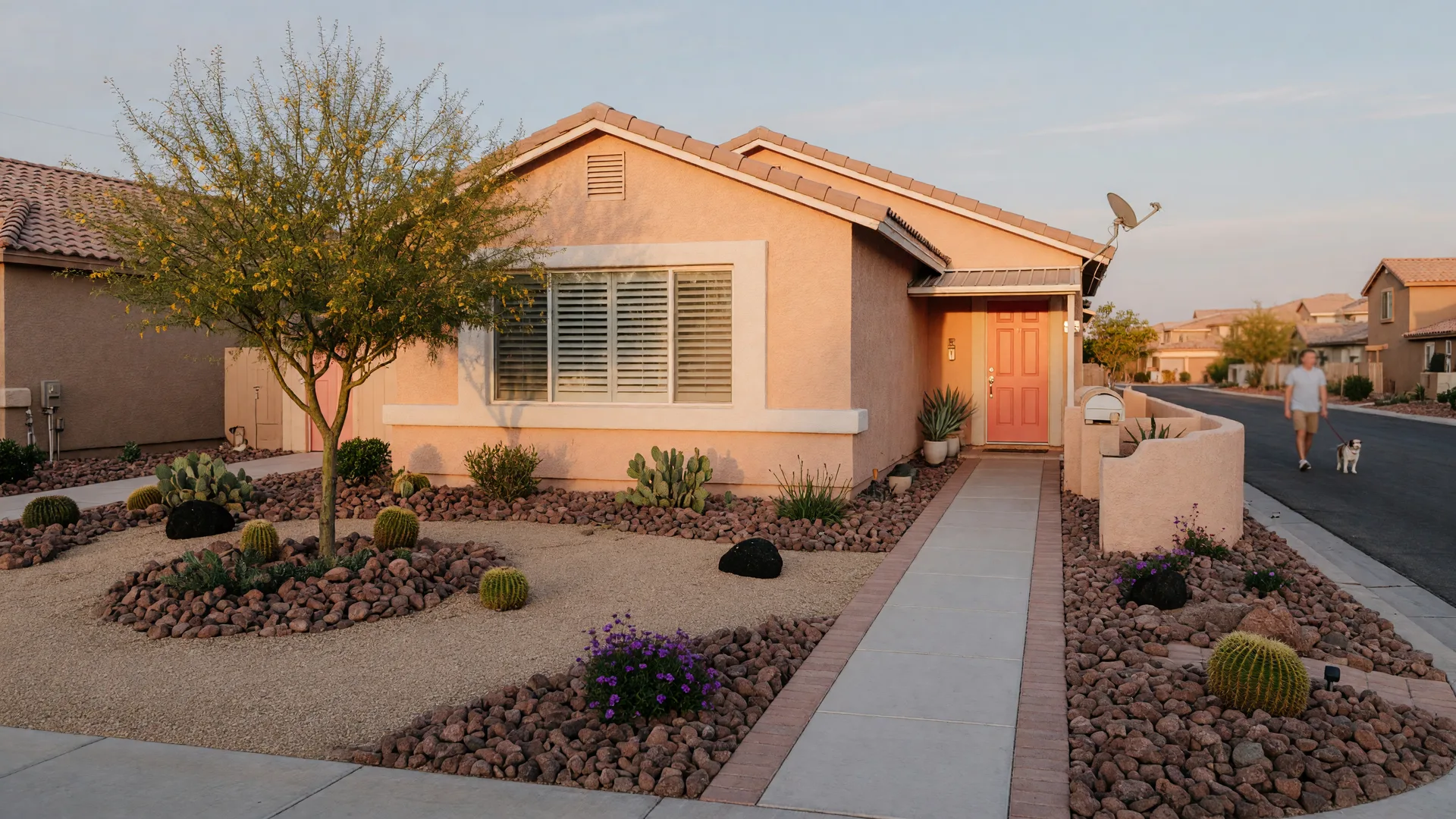
Downsizing in Las Vegas: A Decision-First Guide for Seniors and Families
Moving to a smaller home or a 55+ community is a major life decision. Here is a decision-first guide to downsizing in Las Vegas, with the emotional and financial questions handled together.
 Life Transitions
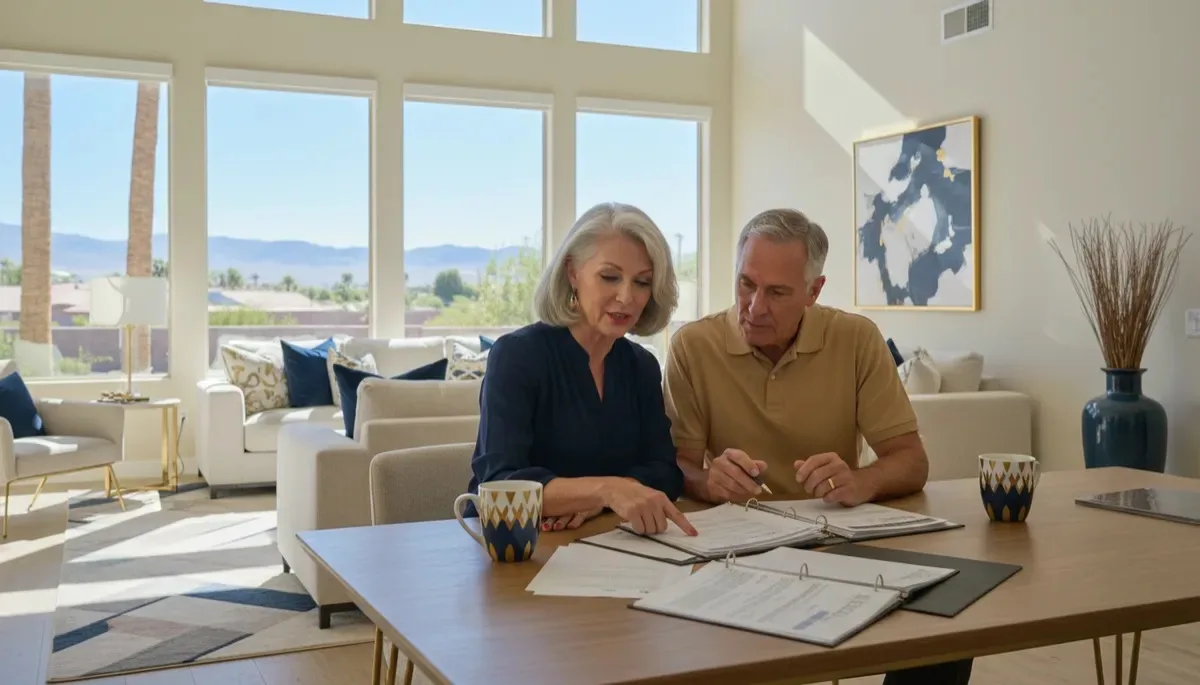
Your Las Vegas Downsizing Roadmap: What to Know Before You Make the Move
Five check-in points to know when it is time to rightsize your Las Vegas home, plus the neighborhoods, condos, and 55+ communities worth considering, from Steve Lockhart.
The next step
Want this applied to your situation?
The article is the context; the consultation is the strategy. Bring your question, and we will develop a plan that works for you, in plain language, without pressure.
Schedule a Consultation#LasVegasRealEstate #LasVegasRealtor #TheLockhartMethod #ListWithATwist #RealEstateStrategy #SellYourHomeLasVegas #AICertifiedAgent