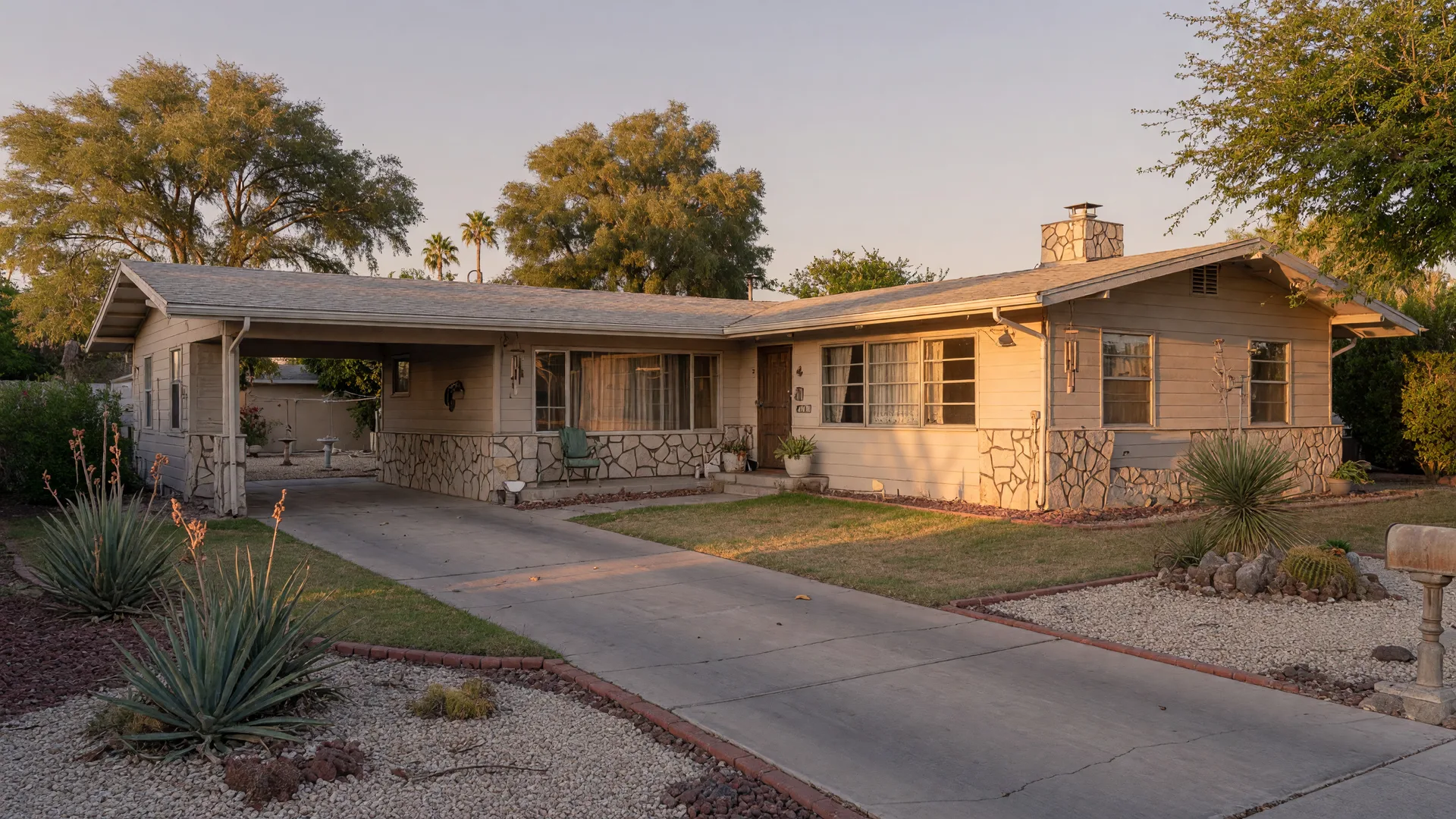
A Nevada judge can order the house sold when spouses cannot agree. How a court ordered home sale in Las Vegas works, from community property to proceeds.
The short answer
When a divorce reaches a point where both spouses cannot agree on what to do with the home, a Nevada family court judge has the authority to step in and order the property sold. That is called a court-ordered home sale, and it means the decision is no longer up for debate.
What Triggers a Court-Ordered Home Sale in Nevada?
When a divorce reaches a point where both spouses cannot agree on what to do with the home, a Nevada family court judge has the authority to step in and order the property sold. That is called a court-ordered home sale, and it means the decision is no longer up for debate. The home will be listed, marketed, and sold according to the court's timeline and terms, regardless of whether one or both parties want that to happen. If you are facing this situation in a court ordered home sale Las Vegas scenario, here is what to expect and how to navigate it thoughtfully.
Most divorcing couples prefer to resolve the home question through agreement, whether that means one spouse buys out the other, they sell voluntarily and split the proceeds, or they reach some other arrangement. A court-ordered home sale typically happens when that agreement breaks down and the judge has to step in to create a clear path forward for everyone involved.
Nevada is a community property state, which means that, in general, property acquired during the marriage is presumed to belong equally to both spouses. Under Nevada law (including NRS 125.150), the court is required to divide community property equally where practicable, unless there is a compelling written reason to do otherwise. The marital home, if purchased during the marriage or later transmuted into community property, usually falls into that category and gives each spouse a legal claim to the equity. For the broader picture of how Nevada handles the house in a divorce, the Ask Steve divorce library covers selling, buyouts, equity division, refinancing, and the mortgage in plain language.
Common Situations That Lead to a Court-Ordered Sale
In my divorce real estate Las Vegas work, I see a fairly consistent pattern in the cases that end up with a judge ordered home sale Nevada families did not originally plan on. Common situations include:
- Neither spouse can agree on whether to sell, who keeps the home, or at what price
- One party refuses to cooperate with a voluntary sale, for example, by blocking showings or refusing to sign listing paperwork
- The court determines that neither party can realistically afford to buy the other out or maintain the home on their own
- The home must be liquidated to equitably distribute marital assets, pay off community debts, or satisfy liens
When both spouses hold a legal claim to equity in the home and cannot resolve the dispute on their own, the court has tools to enforce an equitable outcome, and a court-ordered home sale is one of them. In some cases, this happens through the divorce itself. In others, it may involve a partition action under Nevada's real property statutes when co-owners cannot agree on what to do with jointly owned property. Either way, the underlying goal is the same: to reach a fair, enforceable resolution when cooperation has broken down.
📌 Key Takeaway: A forced home sale divorce Nevada outcome usually does not come out of nowhere. It is the court's response when negotiation, compromise, and voluntary solutions have stalled or failed.
How the Process Works, Step by Step
Once a court order is issued, the sale follows a structured path. While every case is unique, there are common steps you can expect in a court ordered home sale Las Vegas homeowners might experience. Understanding this timeline can make the process feel less overwhelming and more manageable.
1. The Court Issues and Defines the Order. The judge's order will typically outline the required listing timeline, how the list price will be determined, how an agent will be selected, and how proceeds will be distributed after closing. In some situations, the order may also address repairs, access for showings, and how disagreements will be handled during the listing period. This is where your attorney's guidance is critical: the language in this order becomes the rulebook for the entire transaction.
2. An Agent Is Appointed or Agreed Upon. Some orders allow both parties to jointly choose a real estate agent. Others specify the process or appoint one through court channels, sometimes using a neutral third party or a referee. Once selected, that agent is responsible for managing the transaction within the requirements of the order and in close communication with both sides and their attorneys. In my role, I am often brought in because of my background specifically in divorce real estate Las Vegas cases, which helps keep the process steady and predictable.
3. Property Valuation and Pricing Strategy. The order may require an independent appraisal, a broker price opinion, or a specific pricing formula. In a normalizing Las Vegas market, where recent data shows modest price softening, longer days on market, and more buyer leverage, accurate pricing is especially important. Overpricing can lead to extended market time, price reductions, and increased stress for both spouses. The goal is to reflect current fair market value, not yesterday's peak or wishful thinking. The Las Vegas market report tracks the latest published figures so the pricing conversation starts with current data.
4. The Home Is Listed and Marketed. The property is photographed, listed on the MLS, and marketed to buyers just like any other home, but with the added structure of court oversight. Showings are scheduled, feedback is collected, and adjustments may be made in coordination with both parties and their legal teams. The sale moves forward even if one party remains reluctant or uncooperative, because the court order is the controlling authority. If a spouse refuses to sign documents at any point, the court can appoint someone, often a commissioner or referee, to execute paperwork on their behalf. That means the transaction does not simply stop because one person decides not to participate.
5. Offers, Negotiation, and Court Compliance. Offers are reviewed according to the terms of the order. Sometimes, the judge will require that any offer at or above a certain price must be accepted. Other times, the parties have a structured window to respond, with escalation to the court if they cannot agree. In a balanced-to-buyer-leaning market like Las Vegas in 2026, negotiating terms such as repairs, closing costs, and timelines can be just as important as the purchase price itself.
6. Closing and Distribution of Proceeds. After all costs are settled, commissions, closing fees, liens, unpaid taxes, and any court-approved expenses, the remaining proceeds are divided according to the court's ruling. Under Nevada's community property framework, that is often a 50/50 split, but there can be exceptions based on the specifics of your case and any written findings the court has made. Title, escrow, and the attorneys work together to ensure the funds are disbursed exactly as ordered, leaving as little room for dispute as possible.
💡 Pro Tip: Ask your attorney and your agent to walk you through a sample net sheet early in the process, so you understand how the numbers may look once everything is paid out.
What Happens If One Spouse Refuses to Cooperate?
This is one of the most common questions I hear when someone is facing a judge ordered home sale Nevada families are worried about. The short answer: the court has significant authority to enforce its orders, and there are mechanisms in place specifically to keep one person from derailing the process for the other.
If a spouse refuses to allow showings, declines to sign paperwork, or actively tries to delay the sale, the court can hold that party in contempt, appoint a commissioner or partition referee to act in their place, or, in more serious situations, involve law enforcement. A court order cannot simply be ignored without consequences. Judges take seriously the obligation to protect both parties' rights to a fair outcome, particularly when community property is on the line.
Even in a court-ordered sale, strategic pricing and presentation help protect both spouses' equity.
In practical terms, what this means for you is that you are not powerless just because your former spouse is difficult. You still have the ability, through your attorney and through the court, to move the sale forward. The key is to document issues, communicate through proper channels, and lean on professionals who understand how to work within the court's structure rather than around it.
The Lockhart Method™ in a Court-Ordered Sale
Working within the framework of a court-ordered sale is different from a standard listing. Every decision carries legal weight, and the margin for error is smaller. Over the years, I have developed a structured approach, the Lockhart Method™, that I use in divorce real estate Las Vegas cases, including court-ordered sales. Here is how I approach it:
Diagnose. Before doing anything else, I review the specific terms of the court order. Every order is different, and understanding those terms shapes everything that follows. I look at deadlines, pricing instructions, access requirements, and how disputes are supposed to be handled. I also talk with the attorneys to understand the broader context of the case so that the real estate decisions support, rather than conflict with, the legal strategy.
Strategize. I work with both parties and their attorneys to build a plan that respects the court's requirements while protecting the financial interests of everyone involved. That includes identifying realistic price points based on current Las Vegas market data, planning for any required repairs or disclosures, and setting expectations for communication. Having a clear, written game plan reduces misunderstandings and helps keep emotions from driving last-minute decisions.
Prepare. Time matters in a court-ordered sale. Getting the home ready efficiently, without unnecessary delays that create legal complications, is a priority. I focus on high-impact, realistic steps: decluttering, basic repairs, and simple improvements that photograph well and show the home in its best light. We balance what the court order requires, what the budget allows, and what the market will actually reward.
Market. The property is positioned to attract serious buyers quickly. In a market that is gradually shifting toward buyers, a prolonged listing period tends to hurt both parties: it increases stress, invites low offers, and can create additional legal friction. My goal is to present the home competitively from day one, using professional photography, accurate pricing, and clear, honest disclosure to build trust with buyers and their agents.
Negotiate. Offers are evaluated within the parameters set by the court order, with both parties' attorneys typically involved in reviewing the path forward. I explain the pros and cons of each offer in plain language, including how it fits with current market realities. In a court ordered home sale Las Vegas environment, I also flag any terms that might conflict with the order, so we can proactively address them before they become issues.
Close. I coordinate closely with title, escrow, and both legal teams to make sure the closing is clean, compliant, and finalized on time. That includes verifying payoffs, confirming how proceeds will be distributed, and ensuring that all required signatures or court approvals are obtained. The goal is to reach the finish line with as few surprises as possible, so you can move forward with your life and your next housing chapter.
📌 Key Takeaway: A structured, methodical approach does not remove all of the emotion from a forced home sale divorce Nevada situation, but it does give you a clear roadmap to follow when everything else feels uncertain.
How to Protect Your Financial Interests
Even when the court is directing the sale, you still have meaningful ways to protect your outcome. The judge controls the framework, but the choices you and your team make inside that framework can significantly influence your net proceeds and your stress level along the way.
Stay Closely Involved With Your Attorney. Your attorney should review the order and advise you at every stage. Real estate decisions and legal decisions are deeply connected in a court-ordered sale. For example, agreeing to certain repairs, credits, or closing timelines may affect how the court views compliance or fairness. When questions arise, I encourage my clients to route them through their legal counsel so that everyone is aligned before decisions are made.
Choose Representation With Divorce Experience. A standard listing agent may not understand the specific protocols, communication dynamics, or legal sensitivities involved in this kind of sale. Divorce real estate Las Vegas work often involves navigating tension, staggered communication, and strict court timelines. Your agent should be comfortable working with attorneys, court-appointed officials, and sometimes very limited direct contact between spouses. Experience in this niche can translate into fewer missteps and a smoother path to closing.
Request an Independent Market Analysis. Before any list price is agreed upon, understanding current Las Vegas market conditions and your home's value gives you a stronger position in the process. With inventory up and buyers having more leverage than in the recent past, pricing based on outdated assumptions can cost you real money. A detailed comparative market analysis, tailored to your neighborhood and property type, helps anchor expectations in reality, for you, your spouse, and the court. The Las Vegas home value page explains how an estimate is built and what it does and does not tell you.
Know Your Net Proceeds Before the Closing Table. Outstanding liens, HOA arrears, or unpaid property taxes will come out of the sale proceeds. In Nevada, residential sellers must also comply with disclosure rules under statutes like NRS 113, which can affect timing and, in some cases, negotiations if issues are discovered late. Clarity ahead of time prevents surprises at closing and reduces the risk of last-minute disputes between you and your former spouse over “who knew what” and “who pays for what.”
Consult a CPA About Potential Tax Considerations. Depending on how long the home was owned and how the proceeds are characterized, capital gains considerations may apply. Your tax professional can help you understand your specific situation, including how filing status, primary residence exemptions, and the timing of the sale may affect your tax picture. I am not a tax advisor, but I strongly recommend looping in a CPA whenever a significant amount of equity is involved, especially when that equity is being split as part of a divorce.
💡 Pro Tip: Think of your attorney, CPA, and real estate agent as a team. When they communicate clearly with each other, you are less likely to end up caught in the middle.
Closing Thoughts
A court-ordered home sale is rarely anyone's first choice. But it does not have to become another source of conflict. With the right real estate professional, a clear understanding of the process, and close coordination with your attorney, this chapter can close on solid financial ground, even if the path to get there is not the one you originally envisioned.
If you are navigating a court ordered home sale in Las Vegas, Henderson, Summerlin, or anywhere in Clark County, I am here to help. Visit DivorceHouseGuide.com to learn more about your options. The Ask Steve divorce library and the Lockhart Insights blog carry more on divorce real estate and Nevada family law.
Disclaimer: This article is general information only and is not legal advice. For your specific situation, work with a Nevada family law attorney.
Frequently Asked Questions
Can a Nevada court actually force me to sell my home?
Yes. A court-ordered home sale is legally binding. Both parties are required to comply with the terms of the order, regardless of personal preference. Under Nevada's community property laws, the court has the authority to divide marital assets, including the home, in a way it deems equitable. When voluntary solutions fail, ordering the sale of the home is one of the tools the judge can use to accomplish that division.
Who chooses the real estate agent?
It depends on the order. Some courts allow both spouses to jointly agree on an agent. Others specify a selection process or appoint a neutral party. In certain partition or enforcement situations, the court may name a referee who then selects the agent. Your attorney can clarify the options in your specific case and help you advocate for an agent with appropriate divorce real estate Las Vegas experience.
How is the list price decided?
Most orders specify a pricing method, often an independent appraisal, a negotiated range, or a structured review period where the agent provides a comparative market analysis. In some cases, the judge may require price reductions after a certain number of days on the market if the home has not sold. The exact process varies by case, but the goal is to arrive at a price that reflects fair market value in the current Las Vegas market, not just what either spouse hopes the home is worth.
What if the home sells for less than expected?
Both parties share in the net proceeds based on the court's distribution ruling, even if the final sale price is lower than originally anticipated. If existing debts on the property, such as a high mortgage balance, HELOC, or liens, complicate the settlement, those issues will need to be addressed as part of the broader divorce resolution. In some cases, the court may need to revisit other aspects of the property division to account for a lower-than-expected sale price.
How long does a court-ordered sale typically take in Las Vegas?
Every case is different. Once the order is in place and both parties are compliant, the listing process can move at a normal market pace, often 30 to 60 days for an active listing, plus a 30-day escrow. In a 2026 market that is leaning slightly toward buyers, homes that are priced correctly and well presented still tend to move efficiently. Disputes, delays, needed repairs, or financing issues on the buyer's side can extend that timeline, which is why planning and communication are so important.
Does it matter if the home was one spouse's property before the marriage?
It can. Nevada law distinguishes between separate property (such as assets owned before marriage or received as a gift or inheritance) and community property. However, separate property can sometimes become community property through commingling or changes in title, a concept called transmutation. The way your home is characterized legally will affect how the court handles it in divorce and whether a court-ordered sale is appropriate. This is a nuanced question that should be reviewed with your family law attorney.
About the author
Written by Steve Lockhart, Las Vegas REALTOR® with First Mutual Realty Group (Nevada license S.0194053), member of the National Association of REALTORS, and creator of The Lockhart Method™.
This article is general information only and is not tax, legal, or financial advice. Your situation deserves a conversation with the right professionals before you act.
Related Articles
More on Life Transitions
 Life Transitions
Downsizing in Las Vegas: A Decision-First Guide for Seniors and Families
Moving to a smaller home or a 55+ community is a major life decision. Here is a decision-first guide to downsizing in Las Vegas, with the emotional and financial questions handled together.
 Life Transitions
Your Las Vegas Downsizing Roadmap: What to Know Before You Make the Move
Five check-in points to know when it is time to rightsize your Las Vegas home, plus the neighborhoods, condos, and 55+ communities worth considering, from Steve Lockhart.
 Life Transitions
The Thanksgiving Conversation: When You Realize Mom Needs More Help
You notice at Thanksgiving that Mom is not moving the same. Here is how to start the conversation about assisted living without ambushing her, as a family.
The next step
Bring your court-ordered sale questions to a strategy conversation
A court ordered home sale in Las Vegas carries legal and real estate layers at the same time. We can talk through your order, your equity, your projected net proceeds, and your timeline in plain language, always routed through your attorney where a legal question is involved, with no pressure and nothing to sign.
Schedule a Consultation