Mom is settled in assisted living and her house sits empty. A realistic family plan for deciding whether to sell, rent, or hold, and what the money is for.
The move is done, Mom is safe, and the family exhales. Then someone says the sentence nobody wants to say: so what do we do with the house?
The short answer
The move is done. Mom is settled in assisted living, the family has caught its breath, and for a few weeks the house just sits there, exactly as she left it.
The move is done. Mom is settled in assisted living, the family has caught its breath, and for a few weeks the house just sits there, exactly as she left it. Then the reality lands: the mortgage or the paid-off deed, the HOA dues, the property taxes, the insurance, the water bill, the yard, and the worry. An empty house is not free. It is a monthly cost and a daily question, and the question belongs to the family now. This post is the realistic plan for answering it.
The first question is not what to do with the house
Before anyone decides to sell, rent, or hold, the family needs to know what the house is for. In most of these situations, the answer is care. Assisted living has a monthly cost, and that cost has to come from somewhere: Mom's income, her savings, long-term care insurance if she has it, benefits she may qualify for, and often the equity in the home she has lived in for decades.
So the real first question is not what to do with the house. It is what the house needs to do for Mom. Once the family understands the monthly care cost and the sources available to pay it, the house decision becomes a math problem with a heart attached, instead of a guessing game.
Sell, rent, or hold: what each option really means
Here is the honest breakdown of the three options, the way I walk families through it:
Selling. Converts the equity into cash that can pay for care, removes every carrying cost, and ends the maintenance and the worry. The tradeoffs are the emotional weight of letting go, the time the sale takes, and the fact that the asset is gone once it is spent.
Renting. Keeps the asset and produces monthly income, which can help cover care costs. The tradeoffs are real: landlord duties or a property manager's fee, vacancies, repairs, tenant risk, and the reality that rent may not cover the full carrying cost in every Las Vegas neighborhood.
Holding empty. Keeps the option open and the memories intact, but it is almost always the most expensive choice: HOA dues, property taxes, insurance, utilities, and maintenance all continue, and an empty house can develop problems nobody notices until they are expensive. Holding usually makes sense only with a clear timeline and a reason.
If you want the fuller framework for this exact decision, my post on whether to sell, rent, renovate, or stay walks through the tradeoffs in detail, and what is my Las Vegas home really worth explains how the value is actually built.
What the money is for
I have sat at kitchen tables where the family home became the family's care fund, and it is a hard sentence to say out loud. The house that raised the kids is now the thing that keeps Mom safe and comfortable. That is not a failure of the house or the family. It is the house doing its most important job yet.
When you frame it that way, the decisions get clearer. You do not need to maximize every dollar if doing so would drag the family through months of conflict. You need a plan that funds the care, honors Mom, and lets the family stay whole. Those three goals can coexist, and they are easier to hold together when the numbers are on the table instead of in everyone's head.
Preparing the house to sell
If the decision lands on selling, the work is straightforward and mostly unglamorous:
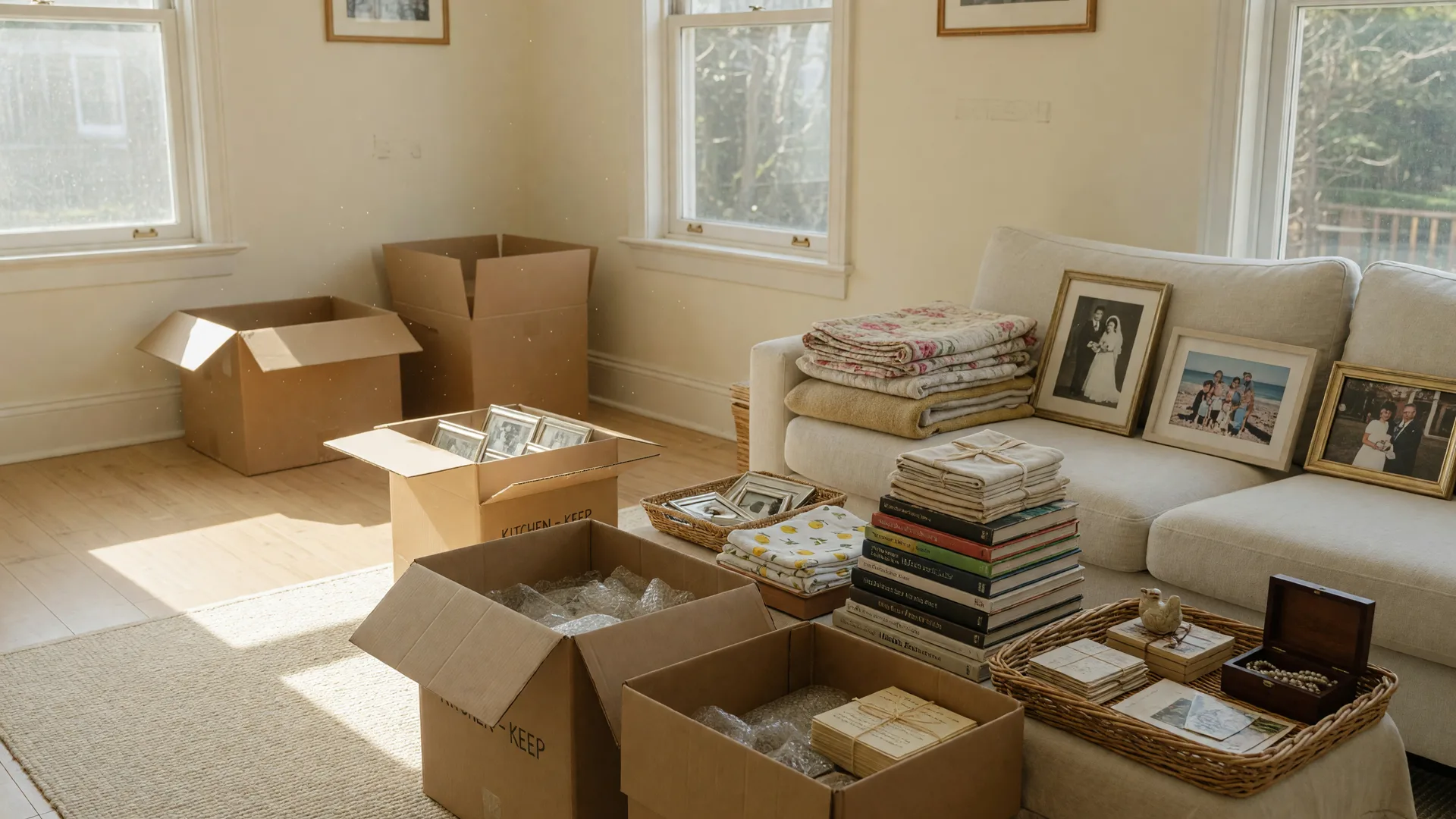
Declutter and depersonalize. Remove personal photos, collections, and the belongings that make it hard for buyers to picture their own life there. This also pairs with the family's sorting work, which I cover in the next post in this series.
Handle deferred maintenance. Fix the dripping faucet, the broken tile, the stuck window. Small repairs matter more than big renovations in most markets.
Clean and stage lightly. A clean, bright, neutral home photographs better and shows better. You do not need new furniture or a full remodel.
Price against current comps. The list price should come from what similar homes have actually sold for recently in that neighborhood, not from what the family hopes or remembers. A free Las Vegas home value estimate gives you a grounded starting point before you spend a dollar on prep.
And the timing matters. If the house can be prepared and listed while it is still clean and cared for, it shows better than a house that has sat empty for months. The longer an empty house sits, the more it costs and the harder it can be to present.
The emotional weight of selling the family home
I will not pretend this part is easy. Selling a parent's home is not like selling any other house. The family is not just selling walls and a roof; they are closing a chapter. Grown children cry in my office over a hallway. Siblings disagree about what Mom would want. Mom herself may grieve a home she can no longer live in.
Here is what I tell families: the strategy can be clear and the heart can still be honored. Take photos and video of the home before it sells. Let each family member take a meaningful memento or a quiet moment. Keep Mom involved in the choices she can still make, even small ones. A sale does not erase the life that happened there, and the family does not have to pretend otherwise to make a sound decision.
Taxes and paperwork: keep it general, ask a CPA
I keep this deliberately general because every family's tax situation is different. Depending on how long the home was owned, whether it was Mom's primary residence, the size of the gain, and how the proceeds are used, there may be capital gains considerations when the house sells. There may also be documents to gather: the deed, the mortgage payoff, insurance records, and any estate or trust paperwork.
My advice is always the same: bring in a CPA for the tax picture and an elder law attorney for the legal and estate questions before you commit to a timeline. I am a Realtor, and my job is the sale strategy, the pricing, the preparation, and the coordination with those professionals so the family is never guessing alone.
What I can help with, and what I cannot
I want to be clear about the lanes again. For medical, legal, and care decisions, please consult an elder law attorney, a geriatric care manager, and senior-care professionals. My expertise is real estate strategy: the home value, the equity, the sell versus rent versus hold analysis, the preparation, the listing, and the coordination with the rest of the team.
The honest place to begin is with the numbers. Get a free home value estimate for Mom's house, then bring the care costs and the family's goals to a conversation and we will build the plan from there.
Call or text me at 725-765-3346, email stevelockhart.lv@gmail.com, or visit stevelockhartrealtor.com.
Frequently Asked Questions
Should we sell or rent Mom's house after she moves to assisted living?
It depends on the numbers and the family's goals. Selling converts the equity into cash that can pay for care and removes the carrying costs, the maintenance, and the management of an empty house. Renting keeps the asset and produces income, but it adds landlord duties, vacancies, repairs, and property management, and the rent may not cover the full carrying cost. Run both scenarios with real numbers before choosing.
Who pays for assisted living, and can the house help?
Care is typically paid from a combination of the senior's income, savings, retirement accounts, long-term care insurance if it exists, and in many families, the proceeds or rental income from the home. The house is often the largest asset in the picture, so understanding its value and equity is a natural early step. A financial advisor and the community's business office can help you map the actual monthly cost against the available sources.
How do we prepare Mom's house to sell?
Start with the practical list: declutter and remove personal items, handle deferred maintenance, make the small repairs that show up in photos, clean thoroughly, and price against current comparable sales in the neighborhood. You do not need a full renovation to sell well in most Las Vegas markets. A free home value estimate is a good first step before you spend anything on prep.
Are there taxes when we sell a parent's home?
There can be capital gains considerations depending on how long the home was owned, whether it was the parent's primary residence, the gain amount, and how the proceeds are handled. The rules are specific and change with each family's situation, so I keep this general on purpose: work with a CPA on the tax picture before you commit to a sale timeline. I am a Realtor, not a tax advisor.
How do we handle the emotional weight of selling the family home?
Give the family permission to feel it. The house holds decades of holidays, milestones, and memories, and selling it is a real loss even when it is clearly the right decision. Keep Mom involved in the meaningful choices where she can be, take photos and video of the home before it sells, and let each family member take a moment to say goodbye. The strategy can be clear and the heart can still be honored at the same time.
This article is general information only and not tax, legal, or financial advice; for tax questions consult a CPA, for legal documents consult an elder law attorney, and for care decisions consult senior-care professionals.
About the author
Written by Steve Lockhart, Las Vegas REALTOR® with First Mutual Realty Group (Nevada license S.0194053), member of the National Association of REALTORS, and creator of The Lockhart Method™.
This article is general information only and is not tax, legal, or financial advice. Your situation deserves a conversation with the right professionals before you act.
Related Articles
More on Homeowner Planning
 Homeowner Planning
 Would You Sell If Your Las Vegas Home Was Worth More Than You Expected?
Las Vegas home value higher than expected? A sell or stay framework: selling, staying, renovating, or waiting. From Steve Lockhart, Las Vegas Realtor.
 Homeowner Planning
 What Would You Do With More Home Equity Than You Expected?
More estimated home equity than you expected is a starting point, not a directive. A calm look at Las Vegas home equity options, from selling to staying.
 Homeowner Planning
 Should I Sell, Rent, Renovate, or Stay?
Some of the most common real estate questions never appear on a listing sheet. Here is the honest framework for deciding what to do with the home you already have.
The next step
Want this applied to your situation?
The article is the context; the consultation is the strategy. Bring your question, and we will develop a plan that works for you, in plain language, without pressure.
Schedule a Consultation