What Rising Pre-Foreclosures, Auction Inventory, and Expired Listings Are Telling Us About Las Vegas Real Estate in 2026
Real estate markets rarely send a single signal. They send several at once, and the skill is reading them together. Right now in Las Vegas, three signals are moving simultaneously — pre-foreclosure filings are rising, auction inventory is building, and expired listings are accumulating. Individually, each one has an explanation. Together, they tell a more interesting story about where this market is in its cycle.
I do not panic about data. I read it. And what I am reading in Las Vegas right now is a market that is repricing — not collapsing, not overheating, but adjusting. Here is what I see.
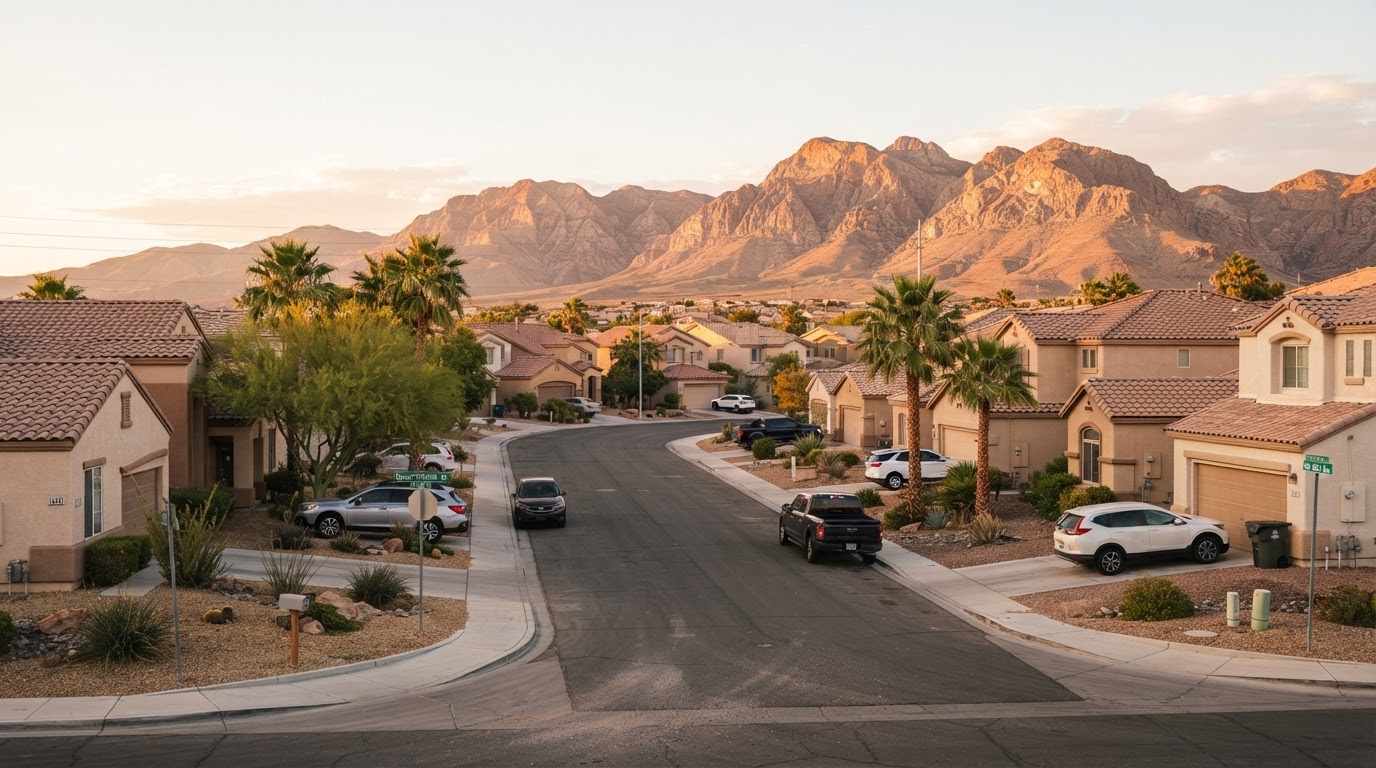
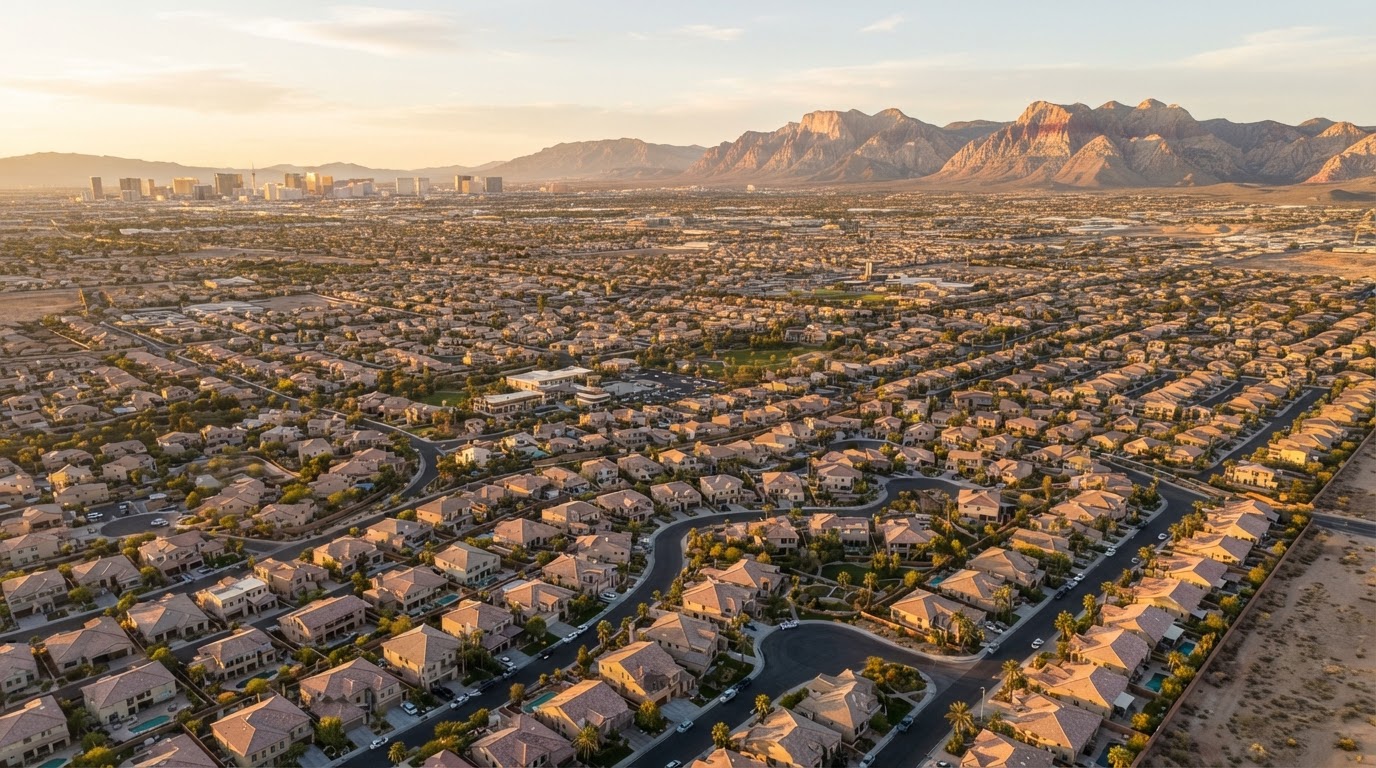
Las Vegas residential neighborhoods at golden hour. Three market signals are moving simultaneously — and together they tell a story.
Signal 1 — Rising Pre-Foreclosure Filings
According to ATTOM Data Solutions, foreclosure filings across the United States jumped 32% year-over-year as of January 2026, with 40,534 properties receiving default notices in a single month. By mid-year 2026, ATTOM's Mid-Year Foreclosure Market Report showed foreclosure starts up 29% annually and bank repossessions reaching their highest level in three years. The Q1 2026 report recorded 82,631 properties starting the foreclosure process — up 7% from the prior quarter and 20% year-over-year. One in every 1,211 U.S. housing units had a foreclosure filing in Q1 2026.
Nevada specifically ranked among the top states for foreclosure activity in ATTOM's June 2026 report, with Clark County listed as a primary driver. The average foreclosure timeline in Nevada was 1,422 days — among the longest in the nation — meaning properties entering the pipeline now may not reach resolution for years.
What Is Driving the Increase?
Several factors are converging:
- Rate reset pressure: Adjustable-rate mortgages taken during the 2021-2022 low-rate environment are resetting at today's higher rates, creating payment shocks for some homeowners.
- Affordability stress on fixed-income households: Rising property taxes, insurance premiums, and HOA dues are stretching budgets that were manageable two years ago.
- End of extended forbearance cycles: Post-pandemic forbearance programs have largely wound down. Homeowners who were in modified or deferred payment plans are now facing full payments again.
- Economic softness in hospitality-dependent employment: Las Vegas's tourism economy is strong but cyclical. Hours, tips, and seasonal employment fluctuations create income instability for a segment of homeowners.
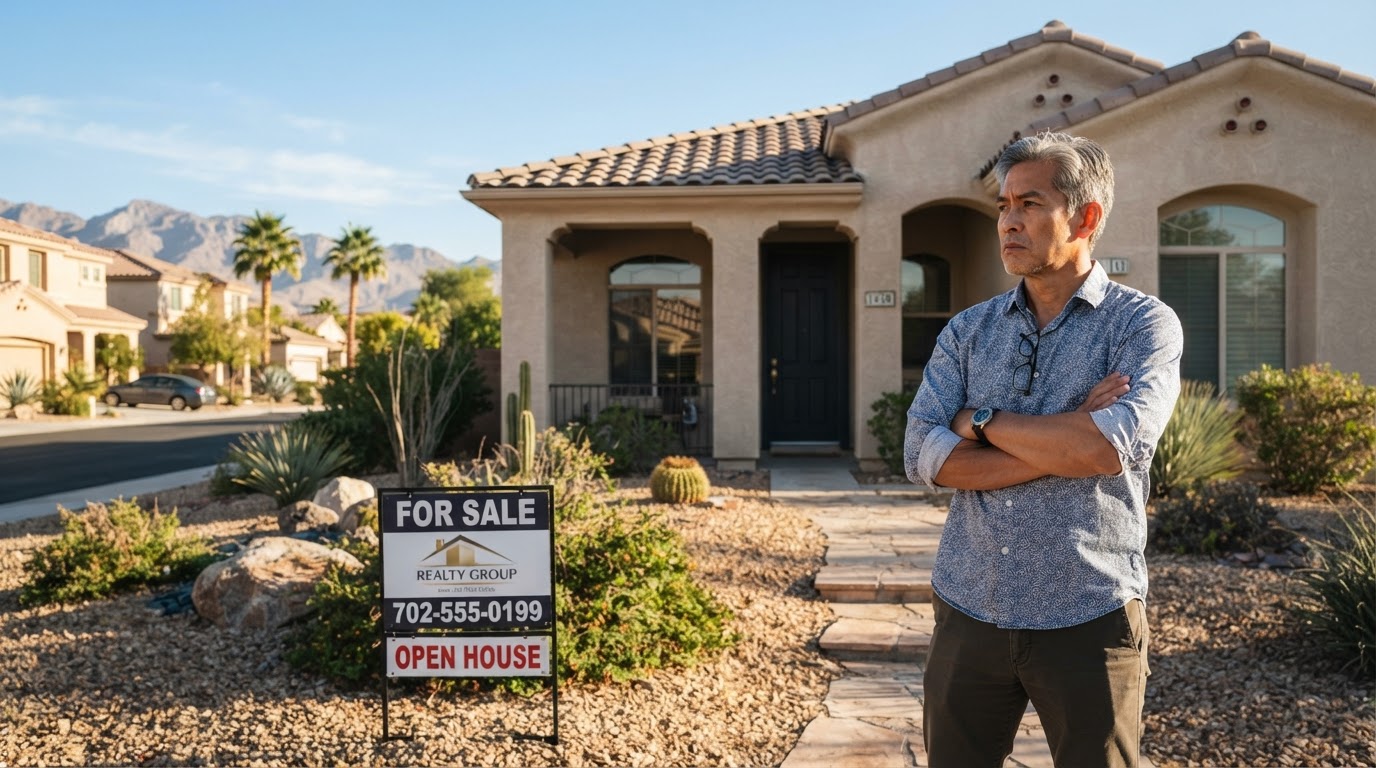
Rising pre-foreclosure filings create a pool of motivated sellers — and opportunity for prepared buyers.
What This Signals
A portion of the seller pool is being created by financial necessity rather than choice. Motivated sellers increase negotiating opportunity for buyers — but this is not the same as a distressed market. These homeowners often have equity, they simply cannot carry the payment. A conventional sale at market value resolves the situation cleanly.
What It Does NOT Signal
This is not a 2008-style collapse. Loan quality, equity levels, and lending standards are fundamentally different today. The homeowners entering pre-foreclosure in 2026 largely qualified under post-2014 QM standards, and most have significant equity built through years of appreciation. The problem is cash flow, not negative equity. That distinction matters enormously for what comes next.
Signal 2 — Building Auction Inventory
When pre-foreclosure filings do not resolve through loan modification, short sale, or conventional sale, the property moves to a trustee sale — Nevada's non-judicial foreclosure auction. Clark County trustee auctions are held regularly, with properties listed through the county treasurer's office and platforms like Auction.com.
According to ATTOM, bank repossessions (REO completions) posted a 45% annual gain in Q1 2026, with 14,020 properties repossessed — up 2% from the prior quarter and 45% year-over-year. By mid-year 2026, REO completions were up 33% annually, according to HousingWire's analysis of ATTOM data. Average foreclosure timelines fell to 563 days nationally — the lowest since 2013 — meaning the pipeline is moving faster.
What builds auction inventory: Notice of Default filings that do not resolve through modification, short sale, or conventional sale within the statutory timeline. When equity is insufficient to make a conventional sale viable, or when the homeowner does not engage with loss mitigation options, the property reaches the auction stage.
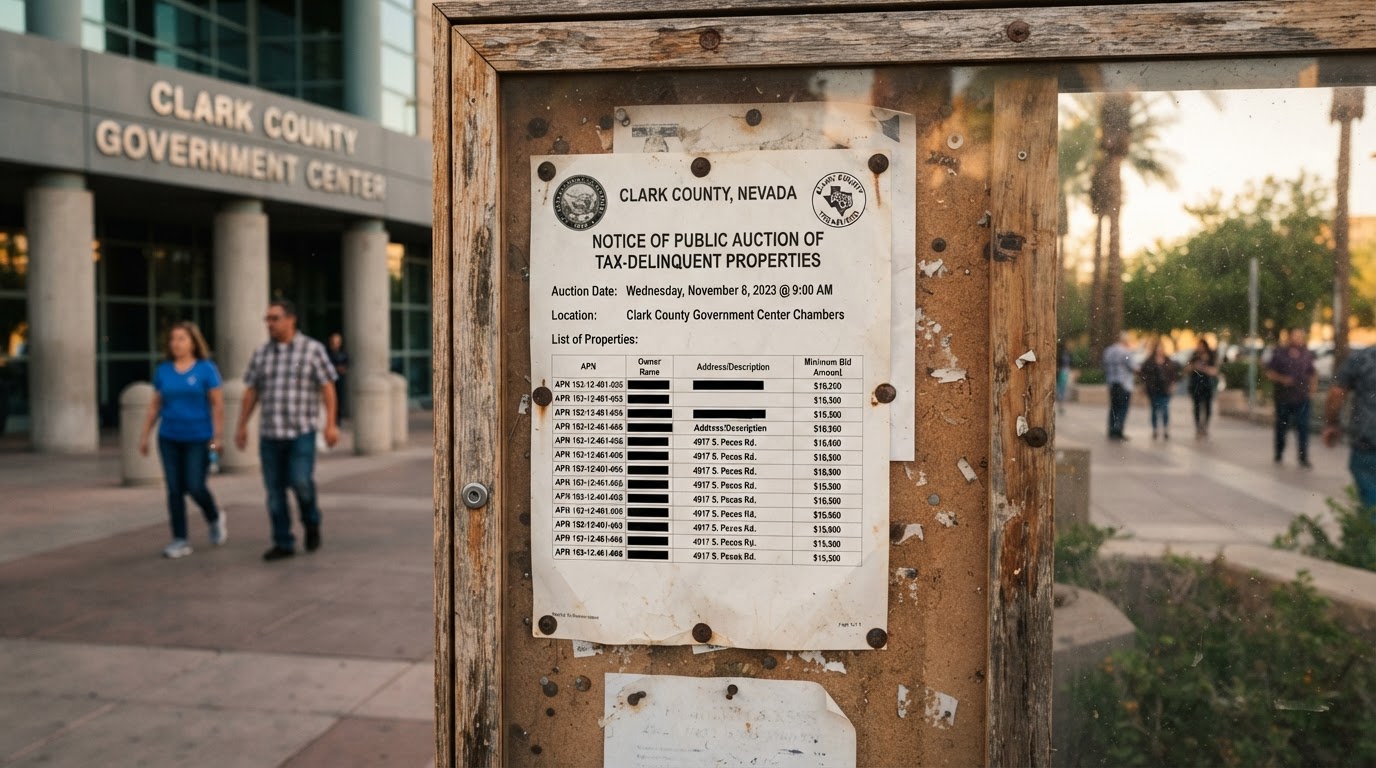
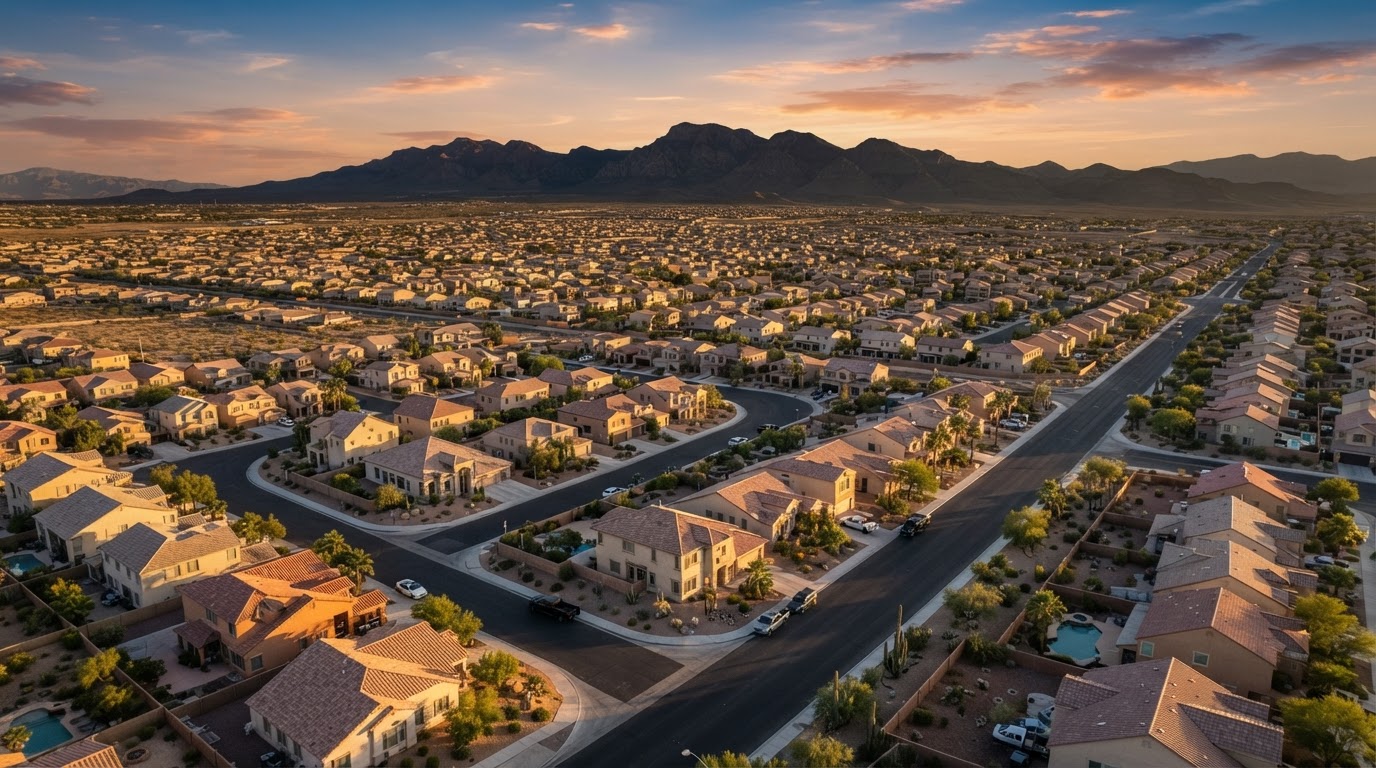
Auction inventory is building as pre-foreclosure filings convert to trustee sales. Professional investors absorb much of it.
The Investor Pipeline
Professional investors — institutional buyers, fix-and-flip operators, and iBuyers — absorb a significant portion of auction inventory. They operate with cash, speed, and established due diligence systems that let them evaluate properties in hours. What reaches traditional buyers on the open market is the remainder: properties that did not sell at auction and returned as bank-owned (REO) listings, or pre-foreclosure properties that entered conventional sale before the auction date.
What Rising Auction Volume Signals
Either motivated sellers did not find conventional solutions in time, or equity was insufficient to make a conventional sale viable. For buyers, more distressed inventory means more below-market opportunities — but also more competition from institutional money that has structural advantages in speed and capital. Individual buyers can compete by focusing on pre-foreclosure stage opportunities, where conventional financing and inspection contingencies are still available. Learn more about distressed property options or short sales as an alternative to auction buying.
Signal 3 — Expired Listings Accumulating
According to REDX's national MLS tracking, expired listings grew by 83% in the two years leading to April 2026, with more than 78,000 listings expiring off the MLS every single week without selling. While that is a national figure, the pattern holds in Las Vegas: as days on market lengthen and inventory builds, more listings are expiring without a sale.
According to Nevada Real Estate Group's analysis of Las Vegas REALTORS MLS data for Q1 2026, properties listed with aspirational pricing — 5% to 8% above market — sat for 60 to 90 days and eventually closed at 92% to 95% of original list price. Many expired before reaching that reduction.
What Causes Expirations
- Pricing disconnects: Seller expectations from the 2021-2022 era have not caught up with 2026 buyer reality. Buyers compare every listing to current comps in real time on Zillow, Redfin, and Realtor.com — and they self-select out when the price does not match perceived value.
- Marketing failures: Passive marketing (list on MLS and wait) does not work in a balanced market. Listings need professional photography, video tours, targeted social campaigns, and agent-to-agent outreach.
- Presentation problems: Poor staging, cluttered photos, or unaddressed deferred maintenance cause buyers to move on to the next option — because now there is a next option.
- Market timing errors: Listing during a seasonal slowdown or into a rising-inventory environment without pricing strategy adjustments.
What Accumulating Expireds Signal
Seller expectations have not yet caught up with market conditions — a pricing reality check is in progress. The feedback loop is important: expireds add back to active inventory when relisted, increasing buyer choice and negotiating leverage. Each expired listing that re-enters the market at a corrected price contributes to the overall inventory rebuild and exerts downward pressure on aspirational pricing across the market.
If your listing expired, read exactly why it happened and what changes now before relisting.
What These Three Signals Mean Together
Here is where the analysis matters. Each signal individually has an explanation. Read together, they tell a more specific story:
| Signal | What It Shows | Direction |
|---|---|---|
| Pre-Foreclosure Filings | Financial pressure building on a segment of homeowners | Up 20-32% YoY (ATTOM) |
| Auction Inventory (REO) | Pipeline converting to completed foreclosures faster | Up 33-45% YoY (ATTOM) |
| Expired Listings | Pricing expectations misaligned with buyer reality | Up 83% in 2 years (REDX) |
Sources: ATTOM Data Solutions Q1 and Mid-Year 2026 Foreclosure Market Reports; REDX national MLS expiration tracking, April 2026.
The three signals together indicate a market in transition from a seller-dominant environment toward a more balanced one. Specifically:
- Seller leverage is declining in some price segments. Homes priced above market are sitting, expiring, and relisting at corrections.
- Buyer selectivity is increasing. Buyers are willing to wait for the right property at the right price — they have options now.
- Pricing precision is more important than it has been in 3-4 years. Overpriced homes expire; correctly priced homes still sell. The margin for error has narrowed.
- The window for below-market acquisition is widening, but competition from institutional buyers is also increasing.
This is NOT a signal of systemic collapse. Nevada's employment base, population growth, and supply constraints remain real. The Las Vegas metro median held near $434,725 through the first half of 2026 — essentially flat year-over-year. But it IS a signal of normalization after an extraordinary run. The market is recalibrating around a new reality of higher rates, rebuilt inventory, and more selective buyers.

Reading the signals together is the skill. Any one data point has an explanation. The pattern is what matters.
What This Means for Sellers
If you are selling in this market, the rules have changed from 2022:
- Price correctly from day one. Expired listings are the tax on overconfidence. Homes priced 5-8% above market sit for 60-90 days and close at 92-95% of original list — netting less than a correct initial price would have.
- Presentation matters more than it did 24 months ago. Professional photography, staging, and a clean online presence are not optional — they are the baseline.
- Consider timing strategically. Seasonal patterns matter more in a balanced market than in a frenzied one. Listing into the spring or fall buyer windows produces better results than listing into a July slowdown.
- Motivated buyers still exist — but they have options now, and they know it. Your listing competes with 15,000+ active homes, not 3,000.
Explore your selling options or get a professional home value analysis before listing.
What This Means for Buyers
If you have been waiting for more leverage, this is the most favorable environment in years:
- More negotiating room than any point in the past 3-4 years. Homes are selling at approximately 98.9% of list price — that gap is real money on a $450,000 home.
- Pre-foreclosure opportunities are real. Early engagement before auction produces better outcomes — you can inspect, finance, and insure conventionally. Explore distressed property options or short sales.
- The risk of waiting: Rates may not decline as expected. If the Fed cuts rates and sidelined buyers return, inventory could tighten again — eroding the leverage you have right now.
The buyers who do well in a market like this are the ones who are prepared, patient, and strategic. They have their financing locked, they know their criteria, and they move when the right property appears at the right terms. They are not waiting for the bottom — they are buying when the math works.
What This Means for Investors
The distressed inventory pipeline is real and growing. But the environment has shifted from 2021:
- Cap rate environment matters more now. Run full numbers before acquisition — acquisition price, rehab costs, carrying costs at current rates, and realistic ARV. The margin for error has narrowed.
- Short-term rental regulatory environment: Clark County has implemented STR regulations that affect investment analysis. Verify current rules before underwriting rental income.
- Exit strategy matters: Flip vs. hold analysis should account for potential inventory normalization. If more inventory enters the market over the next 12-18 months, resale timelines may lengthen.
- Pre-foreclosure is the sweet spot. Properties acquired at the pre-foreclosure stage — before auction — offer inspection, financing, and conventional title insurance. The auction discount is real, but so is the risk premium.
Explore investor-friendly properties or learn about short sale opportunities as an acquisition strategy.
Frequently Asked Questions
Are foreclosures increasing in Las Vegas in 2026?
Yes. According to ATTOM Data Solutions, foreclosure starts rose 20% year-over-year in Q1 2026 and 29% by mid-year. Bank repossessions were up 45% in Q1 and 33% by mid-year. Nevada ranked among the top states for foreclosure activity in ATTOM's June 2026 report, with Clark County as a primary driver. However, volumes remain below historical peaks — this is normalization, not a 2008-style collapse.
What do rising expired listings mean for the Las Vegas market?
Rising expired listings signal a pricing disconnect between seller expectations and buyer reality. According to REDX, national MLS expirations grew 83% in two years as of April 2026. In Las Vegas, homes priced 5-8% above market sit for 60-90 days and often expire before a price reduction can save the listing. This indicates the market is repricing — sellers who adjust to current comps are still selling; those holding out for 2022 prices are not.
Is the Las Vegas real estate market slowing down in 2026?
The market is normalizing, not slowing down. The Las Vegas metro median held near $434,725 through the first half of 2026 — essentially flat year-over-year. Volume held within 2.6% of last year's pace. What changed is supply: active inventory rebuilt above 15,000 homes, and days on market rose from 27 to 30. This is a leverage shift, not a demand collapse. The market is still transacting at volume — just under more balanced conditions.
Should I buy real estate in Las Vegas in 2026?
It depends on your situation. For buyers: this is the most favorable leverage environment since 2019, with negotiating room, seller concessions available in 31-45% of closings, and more inventory to choose from. For investors: the distressed property pipeline is growing, but cap rate analysis and exit strategy matter more than they did in 2021. The buyers who do well in this market are prepared, patient, and strategic — not waiting for a crash that is not coming.
What are the signs of a real estate market shift?
The three primary indicators are: rising months of supply (Las Vegas moved from 1-2 months in 2022 to approximately 4.0 months in 2026), lengthening days on market (up from 27 to 30 days year-over-year), and a declining sale-to-list price ratio (currently 98.9%, meaning homes sell below asking on average). When these three move together — along with rising pre-foreclosure filings and accumulating expired listings — the market is transitioning from seller-dominant to balanced.
Ready to Understand What These Signals Mean for You?
If you are trying to navigate this market — as a buyer, seller, or investor — I am watching these signals daily and happy to give you a clear read on what they mean for your specific situation. No pitch, no pressure. Just the honest picture.
Read the full August 2026 market update for the complete data breakdown, or schedule a conversation to discuss your specific situation.
About the Author: Steven D. Lockhart is a licensed Nevada REALTOR® (License #S.0194053) specializing in residential listings, buyer representation, and real estate solutions for life transitions including divorce, probate, and senior relocations. Based in Las Vegas, NV, he serves the greater Las Vegas Valley including Henderson, Summerlin, North Las Vegas, and surrounding communities. Learn more at stevelockhartrealtor.com.
This post is for informational purposes only and does not constitute legal, financial, or investment advice. Market data is sourced from ATTOM Data Solutions, REDX, GLVAR, Nevada Real Estate Group, and HousingWire. Data is subject to revision. Always consult with appropriate professionals regarding your specific circumstances.

Steve Lockhart
Las Vegas Real Estate Strategist
Steve Lockhart spent nearly 30 years in MGM Resorts executive leadership, from the opening team of The Mirage to Director of Slot Operations at MGM National Harbor, before becoming a Las Vegas Realtor® in 2021. He built The Lockhart Method™ to bring that same high-stakes negotiation and leadership experience to real estate's toughest transitions: divorce, probate, senior downsizing, and distressed property sales.
Learn More About Steve