Translate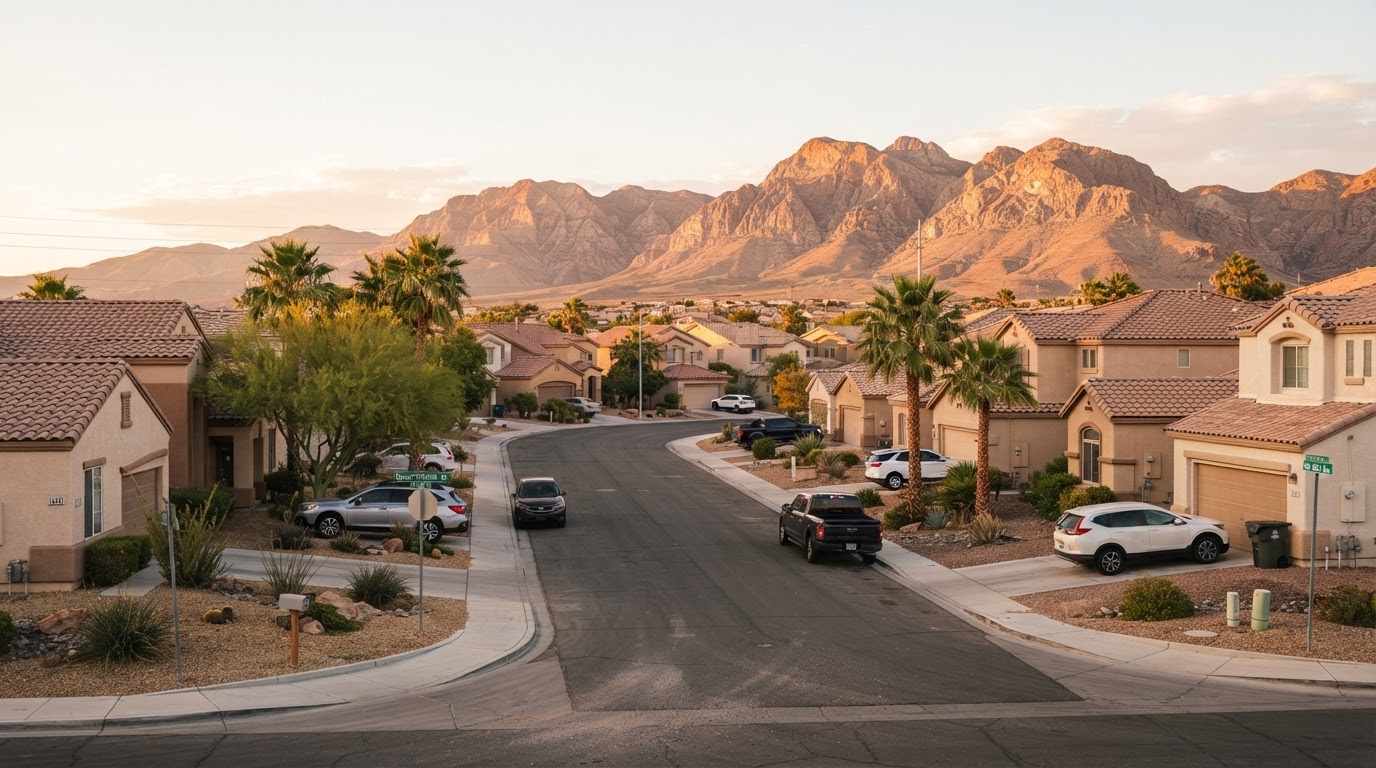
Las Vegas: Buyer's Market or Seller's Market Right Now? How to Read the Data and What It Means for Your Next Move
Everyone has an opinion on the market. Your neighbor says it is still hot. Your coworker says buyers have all the power now. The news says something different every week. The truth is more specific and more useful than any of those opinions — and it lives in a handful of data points that tell you exactly what kind of market you are actually in.
I watch three numbers more than any others when I want to understand the Las Vegas market in real time: months of supply, days on market, and list-to-sale price ratio. Everything else is noise. These three tell the story.
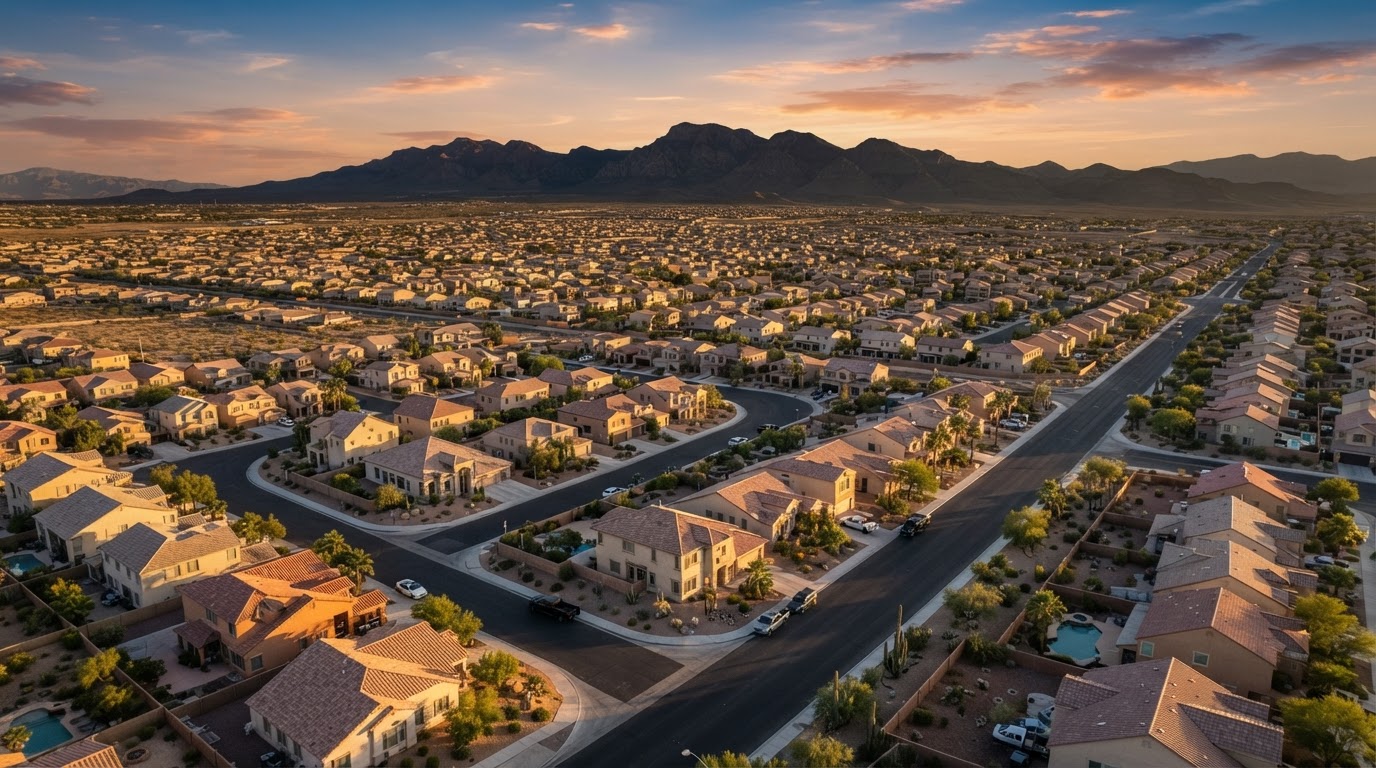
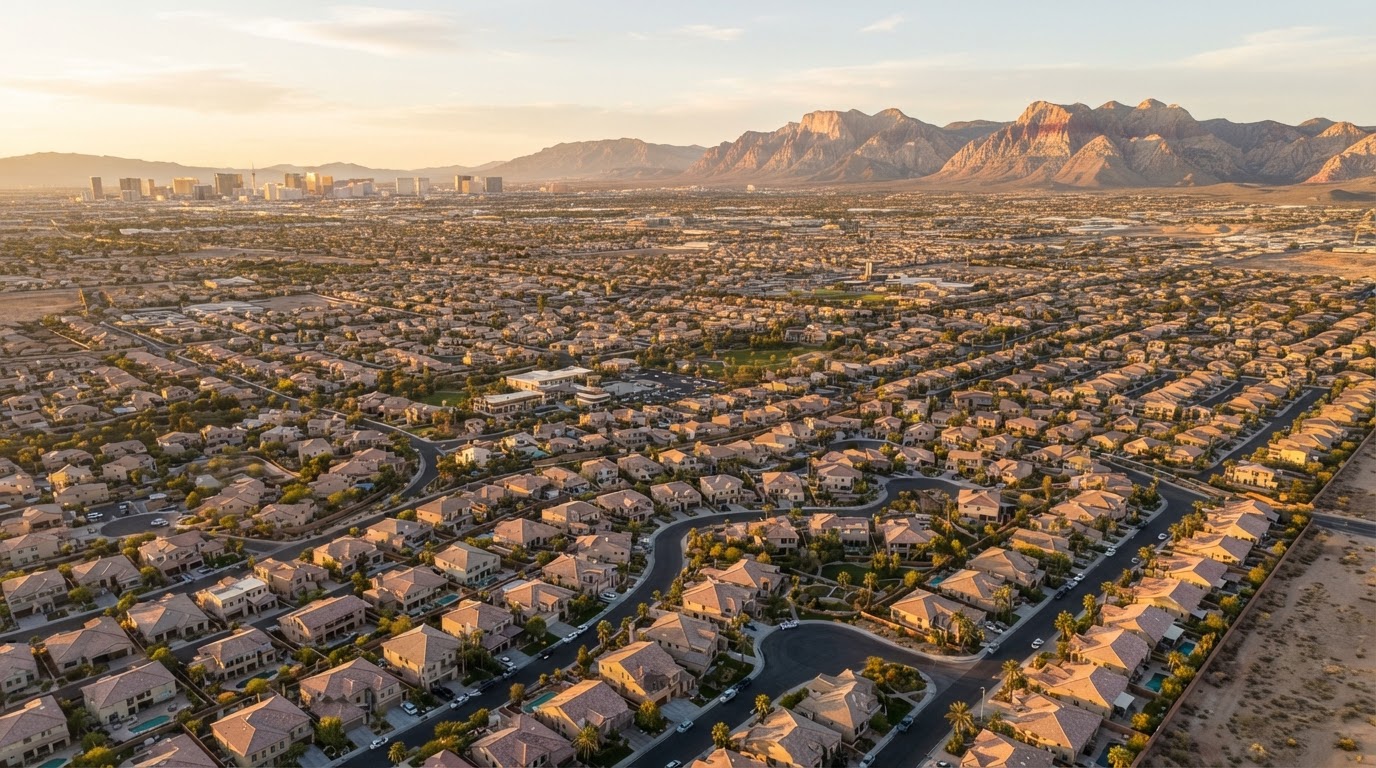
Las Vegas residential neighborhoods at golden hour. The market you see from the street is different from the one in the headlines.
What Makes a Market a Buyer's or Seller's Market?
Before you can read the data, you need to know what the categories actually mean. These are the definitions used across the real estate industry:
Seller's Market
Fewer homes available than buyers who want them. Sellers have leverage — multiple offers, full or above asking price, minimal concessions, fast timelines. The general indicator is less than 3 months of supply.
Balanced Market
Roughly equal negotiating power between buyers and sellers. Reasonable timelines, some negotiation room, fair pricing. The general indicator is 4 to 6 months of supply.
Buyer's Market
More homes available than active buyers. Buyers have leverage — negotiating power on price, terms, and concessions. Homes sit longer. The general indicator is more than 6 months of supply.
These are national guidelines. Las Vegas has its own benchmarks and its own personality — and the data below tells us exactly where we stand right now.
The Three Numbers That Tell You Exactly What Market You Are In Right Now
1. Months of Supply
Definition: At the current rate of sales, how many months would it take to sell all available inventory?
According to GLVAR data and reporting from the Greater Las Vegas Association of REALTORS, Las Vegas reached approximately 4.0 months of supply for single-family homes as of late July 2026, up from approximately 3.6 months one month earlier. That number places the valley squarely in the balanced range — the most balanced the market has been since 2022.
For context, during the peak seller's market of 2021 to 2022, Las Vegas was running at 1 to 2 months of supply. The shift from 1.5 months to 4.0 months is not a crash. It is a normalization — and it hands buyers meaningful leverage for the first time in years.

Reading the market is a skill. Three numbers tell you more than any headline ever will.
2. Days on Market (DOM)
Definition: How long the average home sits before going under contract.
GLVAR data shows median days on market rose from 27 to 30 in the first half of 2026 compared to the same period in 2025 — an 11% increase. Redfin's data for the Las Vegas metro shows an average of 52 days on market as of June 2026, up from 46 days the prior year.
The trend direction matters more than the absolute number. Days on market is rising, which signals buyer hesitation, pricing pressure, and more negotiating room. When DOM was 15 to 20 days in 2022, buyers had no time to think. At 30 to 52 days, buyers can evaluate, compare, and negotiate.
3. List-to-Sale Price Ratio
Definition: What percentage of list price homes are actually selling for.
Zillow data shows a median sale-to-list ratio of 98.9% for Las Vegas as of May 2026. Redfin reports homes selling at approximately 2% below list price on average. According to LVR data, seller concessions appeared in approximately 31% to 45% of closings in Clark County.
What this means: most homes are selling below asking. Buyers have negotiating room that did not exist 18 to 24 months ago. Only about 19.7% of sales are closing at or above list price, per Zillow — and those are typically the best-presented, most accurately priced homes.
What the Current Las Vegas Data Shows — August 2026
Here is the verified data picture for the Las Vegas metro as of August 2026, drawn from GLVAR, Redfin, Zillow, and FRED:
| Metric | Current Reading | Trend |
|---|---|---|
| Months of Supply (SFR) | ~4.0 months | Up from 3.6 (prior month) |
| Median Days on Market | 30 to 52 days | Up 11% year-over-year |
| Sale-to-List Price Ratio | ~98.9% | Below 100% = buyer leverage |
| Active SFR Inventory | ~7,850 to 15,141 | Rebuilt significantly from 2022 lows |
| Median Sale Price (SFR) | ~$434,725 to $490,000 | Flat year-over-year (+0.5%) |
| Seller Concessions | 31% to 45% of closings | Rising — buyers gaining leverage |
Sources: GLVAR, Redfin, Zillow, FRED. Data varies by source and methodology — ranges shown reflect the spread across verified sources. SFR = single-family residential.
What these numbers collectively indicate: Las Vegas is in a balanced market tilting toward buyers. It is not a buyer's market by the strict definition (more than 6 months of supply), but it is the most buyer-friendly environment since 2019. The leverage has shifted.
What I find more useful than any single data point is the direction of the trend. A market moving from 2 months to 3.5 months of supply is loosening — buyers are gaining ground even if it is still technically a seller's market. Direction tells you where leverage is heading.
What a Buyer's Market Means If You Are Selling
If the market continues loosening, here is what sellers need to understand:
- More competition from other listings. Your home is one of thousands, not one of a handful.
- Buyers have time to be selective. Presentation and pricing matter more than ever.
- Concessions are back on the table. Closing costs, repair credits, rate buy-downs — buyers are asking for them and getting them in 31% to 45% of closings.
- Days on market increase. Patience and strategy matter more than speed.
- The expired listing risk increases. Overpriced homes in a loosening market sit and stigmatize. According to LVR data, homes priced 5% to 8% above market sit for 60 to 90 days and eventually close at 92% to 95% of original list price — netting less than a correct initial price would have.
What to do: Price correctly from day one. Invest in presentation — professional photography, staging, and a clean online presence. Consider a professional home value analysis before listing. The margin for pricing error has narrowed.

For buyers, this is the most opportunity-rich environment since 2019. Contingencies are back. Inspections are back. Negotiation is back.
What a Buyer's Market Means If You Are Buying
If you have been waiting for more leverage as a buyer, this is the most favorable environment in years:
- More inventory to choose from — less panic, more thoughtful decision-making.
- Negotiating room that did not exist 18 to 24 months ago. Homes are selling at 98.9% of list price on average — that 1.1% gap is real money on a $450,000 home.
- Seller concessions: Ask for them. Closing cost contributions, rate buy-downs, and repair credits are available in over a third of closings.
- Time to conduct thorough due diligence without being pressured out of inspection periods.
- The risk: Waiting for prices to fall further while paying rent. Opportunity cost is real. Las Vegas home values have been essentially flat year-over-year — they are not crashing, they are stabilizing. Buyers who wait for a crash that is not coming may pay for it in accumulated rent and missed equity.
Buyers who waited for a buyer's market in Las Vegas for the past decade waited through $200,000 in appreciation. Market timing is almost always less valuable than time in the market. Buy when you are ready and when the numbers work — not when the headlines tell you to.
What a Seller's Market Means If You Are Buying
Even in a balanced market, certain segments still behave like a seller's market. Well-priced homes in desirable communities like Summerlin and Anthem can still receive multiple offers. Here is what to be prepared for:
- Competition is real — pre-approval is mandatory before viewing homes.
- Multiple offer situations: Know your walk-away number before you make an offer.
- Escalation clauses, limited contingency periods, faster timelines may be needed for the most desirable properties.
- The risk of waiving inspection — understand what you are giving up and why. In a balanced market, you should not need to waive it.
- Strategy: Relationships with listing agents, flexible timelines, and strong pre-approval letters from recognized local lenders still matter.
What a Seller's Market Means If You Are Selling
If you are selling into a segment that still has leverage, use it strategically — not greedily:
- Maximum leverage — use it strategically, not greedily. Overpricing in a seller's market is still a mistake — it invites a feeding frenzy at a price you then have to reduce.
- Evaluate all offers holistically: Terms, contingencies, and financing quality matter as much as price.
- The net proceeds matter more than the gross offer number. A $460,000 offer with a 3% seller concession nets you less than a $445,000 offer with no concessions.
Explore your selling options before committing to a strategy. The right path depends on your timeline, your equity, and your next move.

More for-sale signs on Las Vegas streets mean more competition among sellers — and more options for buyers.
What Las Vegas Market Signals in 2026 Are Actually Saying
Two additional signals reinforce what the core data shows:
Rising Pre-Foreclosure Filings
According to ATTOM Data Solutions, U.S. foreclosure filings rose 32% year-over-year as of January 2026, with foreclosure starts up 26% and completed foreclosures up 59%. This is the eleventh straight month of annual increases. In Clark County specifically, foreclosure activity has been rising steadily. What this signals: some homeowners are under financial pressure from elevated rates and post-pandemic affordability stress. This adds inventory to the pipeline and signals seller motivation in specific price bands.
Rising Expired Listings
As days on market lengthen and inventory builds, more listings are expiring without selling. According to LVR data, homes priced 5% to 8% above market sit for 60 to 90 days and accumulate buyer stigma. What this signals: a pricing disconnect. Sellers who listed with aspirational pricing from the 2022 era are finding that today's buyers will not pay those numbers. The market is punishing overpricing and rewarding precision.
Together, these signals indicate a market in transition — not crisis. The Las Vegas housing market is recalibrating around a new reality of higher rates, rebuilt inventory, and more selective buyers. That is a healthier market than the frenzy of 2021 to 2022, even if it feels less exciting.
Frequently Asked Questions
Is Las Vegas a buyer's market or seller's market in 2026?
As of August 2026, Las Vegas is in a balanced market tilting toward buyers. With approximately 4.0 months of supply, 30 to 52 days on market, and a 98.9% sale-to-list ratio, the market is the most balanced it has been since 2022. It is not a strict buyer's market (which requires more than 6 months of supply), but buyers have more leverage than they have had in years.
How do I know if it is a good time to buy in Las Vegas?
Look at the three numbers: months of supply (4.0 = balanced), days on market (rising = buyer leverage increasing), and sale-to-list ratio (98.9% = homes selling below asking). If you have stable income, can qualify at current rates (6.2% to 7.0% for a 30-year fixed per Freddie Mac), and plan to stay in the home for more than 3 to 5 years, the current market offers more selection and negotiating room than any time since 2019.
Should I sell my Las Vegas home now or wait?
The answer depends more on your personal situation than on market timing. Prices are flat year-over-year — waiting is unlikely to produce a significantly higher sale price. Meanwhile, inventory is rising, which means more competition if you wait. If your life circumstances point toward selling — a move, a divorce, a downsizing decision, an estate sale — the current market still supports a well-priced sale. Read more in our detailed seller timing guide.
What is months of supply in real estate?
Months of supply measures how long it would take to sell all current inventory at the current pace of sales. Under 3 months traditionally favors sellers. Four to 6 months is balanced. Over 6 months favors buyers. Las Vegas is currently at approximately 4.0 months for single-family homes and 5.6 months for condos and townhomes — meaning the condo segment is closer to buyer's market territory.
What does days on market tell you about a real estate market?
Days on market (DOM) measures how long the average home sits before going under contract. Rising DOM signals buyer hesitation and pricing pressure. Falling DOM signals urgency and competition. Las Vegas DOM rose from 27 to 30 days (GLVAR) and 46 to 52 days (Redfin) year-over-year — a clear signal that buyers have more time and more leverage.
How has the Las Vegas housing market changed in 2026?
The most significant change in 2026 is the shift in leverage. Inventory rebuilt to approximately 7,850 to 15,141 active listings (depending on source and methodology), days on market rose 11% year-over-year, and seller concessions appeared in 31% to 45% of closings. Prices remained essentially flat at a median of $434,725 to $490,000 for single-family homes. The market moved from seller-dominated to balanced — the most significant structural shift since 2022.
Ready to Understand What This Means for Your Situation?
Understanding where the market is right now is the foundation of every smart real estate decision — whether you are buying, selling, or deciding to wait. The data tells the story. But what it means for you depends on your specific situation, your timeline, and your goals.
If you want a clear picture of current conditions and what they mean for your specific situation, I am available for a no-pressure conversation. I will tell you exactly what the numbers show and what I would do in your position — no pitch, no pressure, just clear information.
About the Author: Steven D. Lockhart is a licensed Nevada REALTOR® (License #S.0194053) specializing in residential listings, buyer representation, and real estate solutions for life transitions including divorce, probate, and senior relocations. Based in Las Vegas, NV, he serves the greater Las Vegas Valley including Henderson, Summerlin, North Las Vegas, and surrounding communities. Learn more at stevelockhartrealtor.com.
This post is for informational purposes only and does not constitute legal, financial, or investment advice. Market data is sourced from GLVAR, Redfin, Zillow, FRED, and ATTOM Data Solutions and is subject to revision. Always consult with appropriate professionals regarding your specific circumstances.

Steve Lockhart
Las Vegas Real Estate Strategist
Steve Lockhart spent nearly 30 years in MGM Resorts executive leadership, from the opening team of The Mirage to Director of Slot Operations at MGM National Harbor, before becoming a Las Vegas Realtor® in 2021. He built The Lockhart Method™ to bring that same high-stakes negotiation and leadership experience to real estate's toughest transitions: divorce, probate, senior downsizing, and distressed property sales.
Learn More About Steve