 Translate
I Inherited a Home in Las Vegas — What Happens Next? A Step-by-Step Guide for Nevada Heirs
You have just lost someone. And while you are still in grief, there is a house — possibly full of decades of belongings, possibly with a mortgage, possibly with siblings who have opinions — that needs to be dealt with. The decisions feel impossible because the grief makes everything feel urgent and nothing feel right.
When families call me about an inherited property in Las Vegas, I always start the same way: Take a breath. In most cases, you have more time than you think. Then we figure out the situation together.
This guide walks you through every step: how the property is titled, whether probate is required, how to get the home valued, your three main options, what to know if you decide to sell, and the Nevada-specific details most heirs do not learn until it is too late. No legal jargon. Just the real sequence of events and the decisions you will face.
Inheriting a home is both a gift and a responsibility. Understanding your options before making decisions protects both the property and your family.
First — Understand How the Property Is Titled
Before you do anything else, you need to understand how the property is titled. This single question determines almost everything about what happens next:
Sole Ownership With a Will
If the deceased owned the home in their name alone and left a will, the property goes through probate. The will names the executor and specifies how assets are distributed. Probate is the court-supervised process that makes those instructions legally binding.
Sole Ownership Without a Will (Intestate)
If there is no will, Nevada's intestacy laws determine who inherits. A spouse and children are first in line. If there is no spouse or children, the law looks to parents, siblings, and more distant relatives. The court appoints a personal representative to manage the estate. This process still goes through probate.
Joint Tenancy With Right of Survivorship
If the property was owned as joint tenants with right of survivorship — a common arrangement for married couples — the surviving owner automatically inherits the deceased's share. No probate is required for the transfer. A certified copy of the death certificate and an affidavit of survivorship filed with the Clark County Recorder completes the transfer.
Living Trust
If the property was transferred into a living trust before death, the trust controls what happens. The successor trustee — often a family member — distributes assets according to the trust's terms without court involvement. This is one of the most efficient paths because it bypasses probate entirely.
Transfer on Death (TOD) Deed
Nevada allows property owners to record a Transfer on Death deed. This deed names a beneficiary who automatically receives the property when the owner dies — no probate required. The owner retains full control during their lifetime. If you are not sure whether a TOD deed was recorded, check with the Clark County Recorder's office.
How do you find out how the property is titled? Check the deed at the Clark County Assessor's office. Search for trust documents in the deceased's files — a bank safe deposit box, a filing cabinet, or with their estate attorney. This information determines your next step.
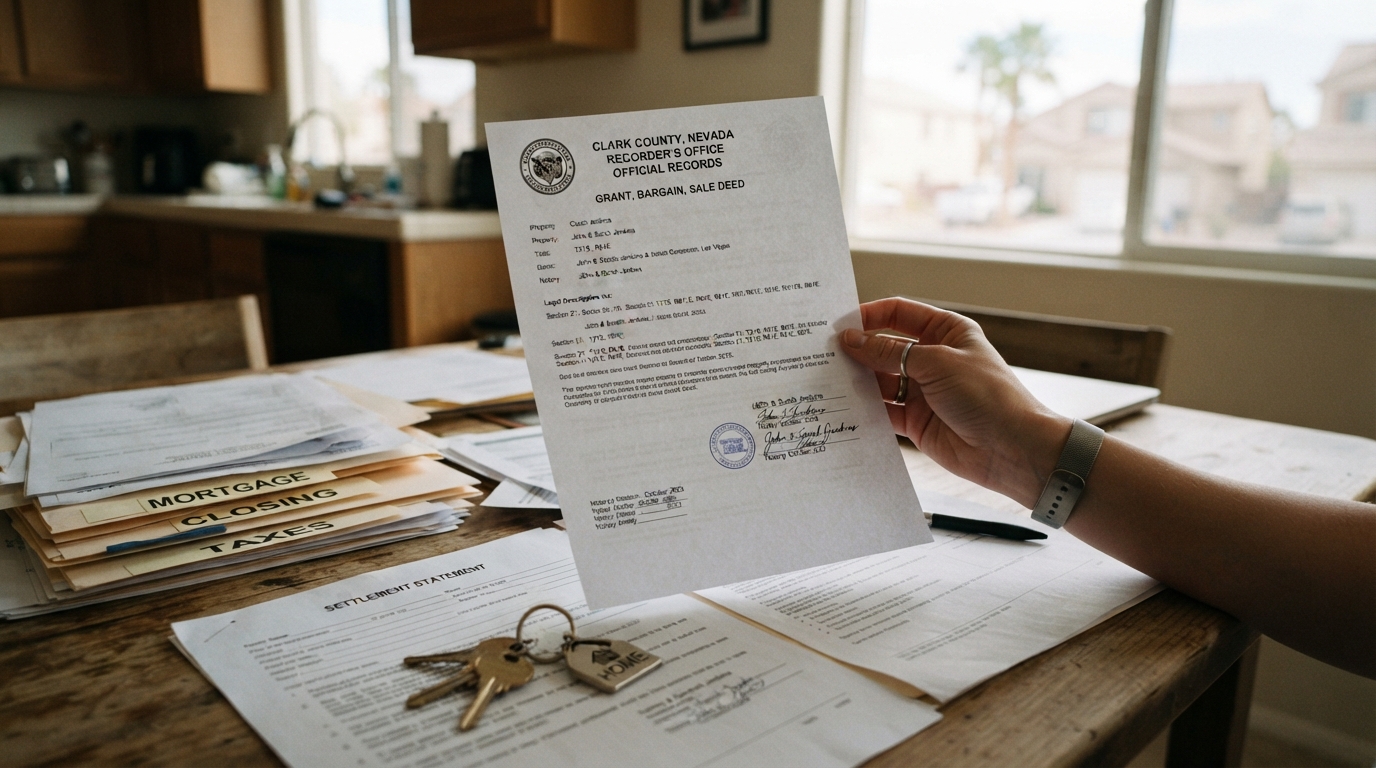
How the property is titled determines whether probate is required — and understanding this before taking action can save months of complications.
Does This Property Need to Go Through Nevada Probate?
Probate is the court-supervised process of transferring a deceased person's assets to their heirs. In Nevada, whether probate is required depends on how the property is titled and the total value of the estate.
Nevada probate thresholds: Estates with a total value under $25,000 (excluding exempt property) may qualify for a simplified affidavit process under Nevada Revised Statutes (NRS) 146.080. However, real estate almost always pushes an estate above this threshold, which means formal probate is typically required when a home is involved.
Nevada probate timeline: An uncontested estate with real estate typically takes 4 to 9 months from the time the petition is filed. Contested estates — where heirs disagree on distribution, the will is challenged, or there are creditor disputes — can take 12 to 18 months or longer.
What happens during probate? The court appoints a personal representative (executor), who inventories the estate's assets, notifies creditors, pays legitimate debts, and distributes the remaining assets according to the will or Nevada intestacy law. If the home is being sold, the court may need to approve the sale depending on the terms of the will and the stage of probate.
I strongly recommend hiring a Nevada probate attorney before doing anything else with an inherited property. Probate is a legal process with specific deadlines, notice requirements, and court filings. An attorney ensures it is done correctly the first time. I work alongside Nevada probate attorneys — this is a collaborative process, not a solo one.
If the property is held in a living trust or was transferred via a TOD deed, probate is not required. The successor trustee or named beneficiary handles the transfer directly. This is why estate planning attorneys recommend trusts for Nevada homeowners — it saves families months of court proceedings and thousands in legal fees.
You can learn more about the probate real estate process on our probate real estate services page.
Getting the Property Valued (And Why It Matters for Taxes)
Two types of value matter when you inherit a home, and they serve different purposes:
Fair Market Value at Date of Death
This is the value of the home on the date the deceased passed away. It establishes your tax basis — the starting point for calculating any capital gains tax if you later sell the property. This is where the stepped-up basis comes in, which we will explain next.
Current Market Value
This is what the home is worth today. If you are deciding whether to sell, this number tells you what you can expect to receive. It may be higher or lower than the date-of-death value depending on market conditions.
Stepped-up basis explained simply: If your parent bought the home for $120,000 in 1995 and it is worth $450,000 when they pass away, your tax basis resets to $450,000. If you sell the home for $450,000, your capital gains tax may be zero or minimal. Without stepped-up basis, you would owe capital gains tax on $330,000 of appreciation. This is potentially the most important tax advantage heirs have — and many do not know it exists.
The stepped-up basis question is the one I always make sure heirs understand before they make any decision. It changes the math entirely. It is one of the most important things to know — and one of the least explained. I have seen families make selling decisions without understanding this, only to discover later that the tax implications were very different from what they assumed.
A professional CMA (Comparative Market Analysis) or a formal appraisal serves both purposes — establishing the date-of-death value for tax purposes and giving you a current market snapshot for your selling decision. I provide CMAs at no cost for families navigating inherited property in Las Vegas, Henderson, Summerlin, and the surrounding areas.
Your Three Options — Keep, Sell, or Rent
Once you understand how the property is titled, whether probate is required, and what the home is worth, you face three main options:
Option 1: Keep It
You can move into the home yourself or hold it as an investment. Before deciding, make sure you can carry the ongoing costs: the mortgage if one exists, property taxes, HOA fees, insurance, utilities, and maintenance. Understand the title transfer process — if probate is required, the court must approve the transfer. Consider whether this home fits your life. A house that was perfect for your parents may not work for your commute, your family size, or your lifestyle.
Option 2: Sell It
You can sell the home as-is or after making improvements to maximize value. Market timing matters — Las Vegas has seasonal patterns and inventory fluctuations that affect sale price. Work with a REALTOR experienced in probate and estate sales, because the process involves legal coordination that a standard sale does not. If there are multiple heirs, all must agree on the sale — or the court may need to decide if they cannot.
Option 3: Rent It
Renting generates monthly income while preserving the asset. This can be attractive if the home is in a strong rental area like Summerlin or Anthem. But renting creates landlord responsibilities: tenant screening, maintenance, lease enforcement, and compliance with Nevada landlord-tenant law. If you live out of state, a property manager is essential — and their fees reduce your net income.
There is no universally right answer. The best choice depends on your financial situation, your relationship with co-heirs, whether you live in Las Vegas or out of state, and what the deceased would have wanted for the property they spent years building into a home.
If You Are Selling — What to Know About Inherited Property Sales in Las Vegas
Selling an inherited property is different from a standard home sale. Here is what you need to know:
- You can sell at any stage of probate. Depending on the will's terms and the stage of probate, you may need court approval before listing or before accepting an offer. Your probate attorney will advise on the specific requirements for your situation.
- As-is sales are common and acceptable. Inherited homes are often sold as-is because the heirs do not have detailed knowledge of the property's condition. The Las Vegas market has active buyers for as-is properties, including investors and buyers looking for homes they can update.
- Disclosure requirements. In Nevada, sellers must disclose known material defects. As an heir, you may not know much about the property's condition — and that is acceptable. You cannot disclose what you do not know. But you cannot hide what you do know. Honesty is both the legal standard and the right thing to do.
- Multiple heirs must all sign. If you inherited the property with siblings or other heirs, all parties must agree to the sale and sign the closing documents. If heirs disagree on whether to sell, on the listing price, or on how proceeds are divided, a partition action may be necessary — a court proceeding that forces the sale and divides proceeds. Refer to a probate attorney if this situation arises.
- Timelines depend on probate. If probate is required, no sale can close until the court approves. Plan for 4 to 9 months minimum from the time probate is filed. If the property is in a trust or has a TOD deed, the timeline can be much shorter.

Inherited homes in Las Vegas can be sold as-is — the market has active buyers for properties in any condition.
I have handled enough inherited property sales in Las Vegas to tell you: the ones that go smoothly are the ones where the heirs communicate early, get legal and tax advice before deciding, and choose a REALTOR who understands this is not a standard transaction. There is a grieving family on the other side of every document.
The Nevada-Specific Details Most Heirs Do Not Know
Nevada has several property and tax rules that differ from other states. If you inherited a home from someone who moved here from California, Arizona, or elsewhere, these details may surprise you:
- Nevada has no state inheritance tax and no state estate tax. Unlike some states that tax inherited assets at the state level, Nevada does not. This is a significant advantage for heirs.
- Federal estate tax only applies to very large estates. The federal estate tax exemption for 2026 is $13.99 million per individual (adjusted annually). The vast majority of estates fall well below this threshold, meaning no federal estate tax is owed.
- Nevada's TOD deed option. For future planning, Nevada allows Transfer on Death deeds. If the deceased recorded a TOD deed naming you as beneficiary, the property transfers to you automatically upon their death — no probate required. Check the Clark County Recorder's office to confirm.
- If the property has a mortgage, the due-on-sale clause may be triggered. When ownership transfers through inheritance, some mortgages include a due-on-sale clause that allows the lender to call the loan due. However, federal law (the Garn-St. Germain Act) generally prevents lenders from enforcing due-on-sale clauses in certain inheritance situations. Check with the lender immediately to understand your options — you may be able to assume the loan or refinance.
- Notify the HOA immediately. If the property is in an HOA community, you may be responsible for dues from the date of death — even before you have legal title. Contact the HOA, provide a copy of the death certificate, and ask about their process for inherited properties. Unpaid HOA dues can accumulate quickly and create liens against the property.
For a comprehensive checklist to help you navigate the inherited property process, download our inherited property checklist or explore our selling an inherited home guide.

The right REALTOR works alongside your probate attorney and CPA — coordinating the real estate side so the legal and tax sides stay on track.
Frequently Asked Questions
What do I do with an inherited home in Las Vegas?
Your first steps are: determine how the property is titled (check the Clark County Assessor's office), consult a Nevada probate attorney, get a property valuation, and notify any mortgage lender and HOA. Once you understand the legal and financial picture, you can decide whether to keep, sell, or rent the home. The most important thing is to get professional advice before taking any action.
Do I have to go through probate to sell an inherited home in Nevada?
If the property was held in a living trust or has a Transfer on Death deed, no probate is required. If the property was owned solely by the deceased, probate is typically required before the property can be sold. Nevada has a small estate affidavit process for estates under $25,000, but real estate almost always exceeds this threshold. Consult a Nevada probate attorney to confirm.
How long does Nevada probate take for real estate?
An uncontested estate with real estate typically takes 4 to 9 months. Contested estates can take 12 to 18 months or longer. The timeline depends on court scheduling, creditor claims, and whether heirs agree on the distribution. If the property is in a trust or has a TOD deed, the transfer can happen in weeks, not months.
What taxes do I owe on an inherited home in Nevada?
Nevada has no state inheritance tax and no state estate tax. Federal estate tax only applies to estates exceeding $13.99 million (2026 threshold). If you sell the inherited home, you may owe capital gains tax — but the stepped-up basis rule resets your tax basis to the home's fair market value at the date of death, which often eliminates or minimizes capital gains. Always consult a CPA for your specific situation.
Can I sell an inherited home in Las Vegas as-is?
Yes. As-is sales are common with inherited properties because heirs often do not have detailed knowledge of the home's condition or the resources to make repairs. The Las Vegas market has active buyers for as-is homes. You must disclose known defects, but you are not required to make repairs or improvements before selling.
Ready to Talk?
Whether you need a property valuation, want to understand your options, or are ready to list — I work with heirs at every stage of this process. There is no pressure and no obligation. The first conversation is simply about understanding where you are and what your options look like.
If you have just lost someone, I am sorry. Take the time you need. The house will still be there when you are ready. And when you are, I will help you navigate it with clarity, patience, and respect for what this property meant to the person who left it to you.
About the Author
Steven D. Lockhart is a licensed Nevada REALTOR® (License #S.0194053) specializing in residential listings, buyer representation, and real estate solutions for life transitions including divorce, probate, and senior relocations. Based in Las Vegas, NV, he serves the greater Las Vegas Valley including Henderson, Summerlin, North Las Vegas, and surrounding communities. Learn more at stevelockhartrealtor.com.
Disclaimer: This post is for informational purposes only and does not constitute legal or tax advice. Nevada probate law, tax rules, and estate planning regulations are complex and situation-specific. Always consult with a licensed Nevada probate attorney and a CPA regarding your specific circumstances before making decisions about an inherited property.
Related resources: Probate Real Estate Services, Selling an Inherited Home, Inherited Property Checklist, Home Value Analysis, Schedule a Call

Steve Lockhart
Las Vegas Real Estate Strategist
Steve Lockhart spent nearly 30 years in MGM Resorts executive leadership, from the opening team of The Mirage to Director of Slot Operations at MGM National Harbor, before becoming a Las Vegas Realtor® in 2021. He built The Lockhart Method™ to bring that same high-stakes negotiation and leadership experience to real estate's toughest transitions: divorce, probate, senior downsizing, and distressed property sales.
Learn More About Steve