 Translate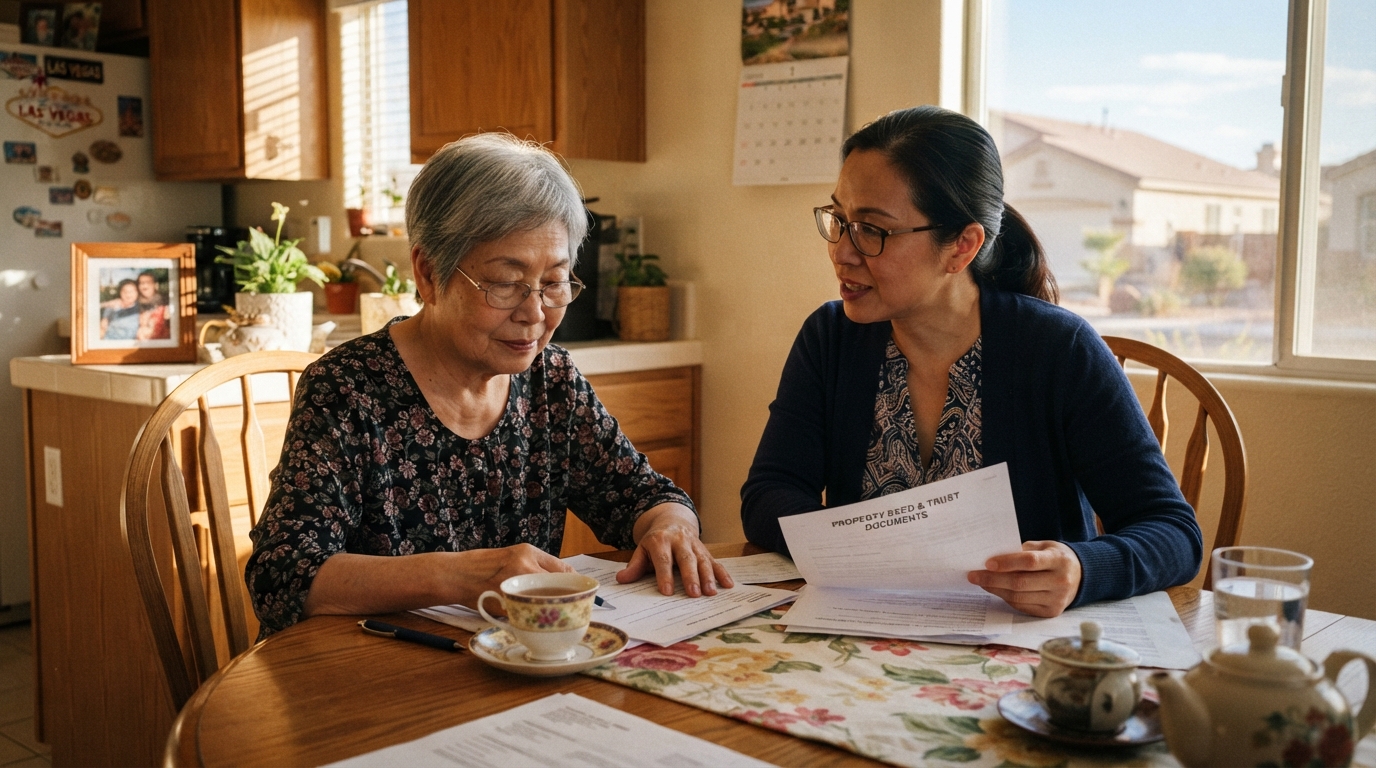
How to Talk to Your Parents About Selling the Family Home in Las Vegas: A Compassionate Guide for Adult Children
You are home for a visit. Your parent is navigating the house more carefully than they used to. The backyard looks overgrown. There are three months of mail on the kitchen counter. You know what the conversation needs to be — and you have been putting it off because you do not know how to start it without it turning into a fight.
In my experience working with senior homeowners in Las Vegas, the adult child almost always calls me first. They are the ones doing the research at midnight, trying to figure out how to honor their parent's independence while also keeping them safe. They love their parent. They are scared of saying the wrong thing. And they are exhausted from carrying the worry alone.
This is a guide for the child, not a sales pitch for the parent. It covers how to start the conversation, what signs to watch for, what options actually exist, and how to find the right help when the time comes.
The conversation about the family home is one of the most important and delicate conversations an adult child will have with an aging parent.
Why This Conversation Is So Hard — And Why It Is Still Worth Having
The family home is not just an asset. It is identity, memory, and independence wrapped in four walls. For your parent, this house may represent decades of raising a family, building a life, and putting down roots in a community. Suggesting they sell can feel, to them, like suggesting they erase that history.
Parents often fear the conversation means you want to take over. They hear sell the house and they think you are saying you cannot handle things anymore. Adult children fear the conversation will damage the relationship permanently — that Mom or Dad will see it as a betrayal, and the trust between you will never recover.
Here is the reframe: this conversation, done right, is an act of love and respect. You are not trying to take something away. You are trying to make sure your parent has choices, that their equity is protected, and that they are set up for the next chapter of their life on their terms, not in crisis mode.
Las Vegas home values have appreciated significantly over the past decade. According to GLVAR data, the median home price in the Las Vegas Valley has roughly doubled since 2014. For many long-term homeowners, the equity built in the family home may represent their largest financial asset. Having a strategy to protect and deploy that equity is not just prudent — it is essential.
I have worked with families where the adult child waited too long to have this conversation. The home fell into disrepair, the equity eroded, and the parent lost the ability to choose their next step. Having the conversation early — even if nothing happens for a year — gives your family options that crisis never provides.
The Signs It Might Be Time — Most Families Recognize These Too Late
Most families do not recognize the signs until after a crisis forces the conversation. Here are the indicators I see most often in my work with senior homeowners across Las Vegas, Henderson, Summerlin, and the surrounding communities:
- Deferred maintenance is accumulating. The roof has not been inspected in years. The HVAC system is original. The landscaping that was once immaculate is now overgrown. These are not just cosmetic issues — they are signs that managing a home has become overwhelming.
- Increasing difficulty navigating the home. Stairs that used to be effortless are now a daily challenge. The yard that was a source of pride is now a burden. A single-story home or a senior-friendly transition may make daily life safer and more manageable.
- Isolation. A house that was built for a family of five now holds one or two people. The neighborhood has changed. Friends have moved. The home that was once the center of a social life is now a place of solitude.
- Rising carrying costs on a fixed income. HOA fees, property taxes, utilities, and maintenance costs continue to rise while income stays flat. The math gets tighter every year.
- The parent is spending more time talking about the house as a burden than a joy. Listen to the language. When home becomes a source of stress rather than comfort, the conversation is already happening — just silently.
- A recent health event. A fall, a hospitalization, a new diagnosis that changed mobility or confidence. These events often accelerate the timeline, and families who have not prepared are forced to make decisions under pressure.
- Neighbors have changed. The community your parent loved — the people they knew, the routines they counted on — looks different now. The social infrastructure that made the home feel like home has shifted.

A Las Vegas home showing early signs of deferred maintenance — often the first visible signal that the conversation about the family home needs to happen.
None of these signs is the conversation. They are the reason to have it.
How to Start Without Damaging the Relationship
The way you start this conversation will largely determine how it goes. Here is the approach I have seen work best across the families I have worked with:
Start with curiosity, not conclusions. Do not arrive with a plan. Arrive with questions. Try: Mom, I have been thinking about how much has changed in the neighborhood. What do you think about where things are heading? This opens the door without pushing your parent through it.
Never frame it as you need to sell. Frame it as I want to make sure you have choices. The difference is enormous. One feels like a directive. The other feels like care.
Bring a financial angle, not an emotional one. Try: I was looking at what homes in your neighborhood are selling for. Did you know your equity has grown significantly? This shifts the conversation from you cannot live here anymore to you have options you may not know about. Curiosity, not pressure.
Consider sibling dynamics carefully. If you have siblings, think about whether including them in this first conversation will help or hurt. Sometimes one child is the right person to start. Sometimes a united front is better. Sometimes a sibling's involvement creates resistance. There is no universal answer — but there is a wrong approach, and that is springing a group intervention on a parent who is not ready.
The most successful senior transitions I have been part of started not with a parent being told what to do — but with a conversation where they felt heard. When a parent believes the decision is theirs, everything moves differently.
Consider a neutral third party. Sometimes the conversation goes better when it does not come from the child at all. A trusted REALTOR who specializes in senior transitions, a financial advisor, or a longtime family friend can open the door in a way that a son or daughter cannot. The parent does not feel like their child is pushing them out — they feel like a professional is offering information.
I have been that neutral third party many times. Sometimes I meet with the adult child first, sometimes with the parent, sometimes with both together. The format does not matter as much as the approach: no pressure, no agenda, just clear information and genuine respect for the parent's autonomy.
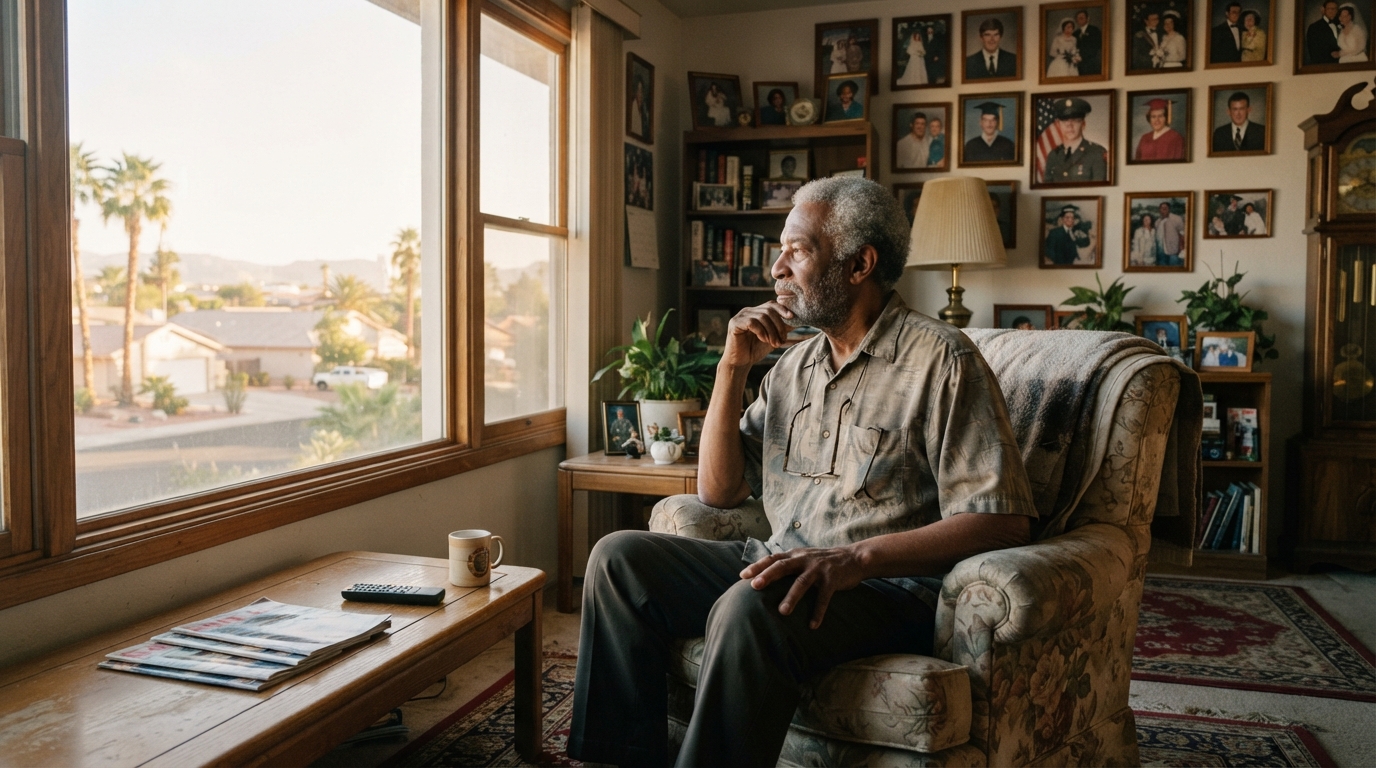
For many seniors, the family home represents decades of memories and identity. The conversation must honor that.
What Options Actually Exist (It Is Not Just Sell the House)
Many adult children enter this conversation assuming the only option is sell and move to a facility. That is not the case. Here are the options I walk families through regularly:
Traditional Sale
List the home, sell it on the open market, and use the equity for the next chapter. This is the most common path and typically maximizes net proceeds. It requires some preparation — decluttering, minor repairs, staging — and the timeline depends on market conditions.
Downsize Within Las Vegas
Many seniors prefer to stay in their community — just in a smaller, more manageable home. Las Vegas has excellent options for this, including single-story homes in Summerlin, Anthem, and 55+ communities like Sun City Summerlin. Same neighborhood, less house.
Cash Offer / Quick Close
For parents who want certainty and speed over maximum price, a cash offer can provide a clean, fast transaction with no showings, no repairs, and no uncertainty. This is not always the best financial choice, but for some families, simplicity and speed are worth the trade-off.
List With a Twist
For sellers who want flexibility — the ability to list the home while also exploring a cash offer simultaneously — I offer a program called List With a Twist. It gives families the best of both paths without locking them into one.
Rent the Property
Some parents want ongoing income rather than a lump sum. Renting the home can provide monthly cash flow while preserving the asset. This option requires a property manager and comes with landlord responsibilities, but it works well for families who want to keep the property in the family.
Reverse Mortgage
A reverse mortgage allows seniors to access equity without selling the home. This is worth exploring with a financial advisor — it is not the right choice for every family, but it is an option that some families use to allow a parent to age in place. I do not provide reverse mortgages, but I can refer you to professionals who do.
Gift or Trust Transfer
For estate planning purposes, the home can be transferred to a trust or gifted to family members. This involves legal and tax considerations that are beyond my scope — I refer families to Nevada estate attorneys for this path. But it is an option worth knowing about.
The goal of the initial conversation is not to choose an option. It is to open the door to all of them.
What the Las Vegas Market Means for Your Parent's Equity Right Now
Las Vegas has been one of the top-appreciating metros in the western United States over the past decade. According to GLVAR data, the median single-family home price in the Las Vegas Valley has risen from approximately $200,000 in 2014 to over $434,000 in mid-2026. That means a parent who purchased a home in the 1990s or early 2000s may be sitting on $200,000 to $500,000 or more in equity they have not counted on.
This equity matters. It can fund the next chapter — a smaller home, an assisted living community, in-home care, or a financial cushion for retirement. But timing matters too. Carrying costs, maintenance decisions, and market conditions all affect the net outcome.
Here is what I want families to understand: equity is not static. A home that sits unmaintained for two years may lose $30,000 to $50,000 in value — not because the market dropped, but because deferred repairs became visible problems that buyers discount. A home that is sold in a rush may leave money on the table because there was no time to prepare it properly.
I have worked with families where waiting two more years cost the estate significantly — not because the market dropped, but because the home required $40,000 in deferred repairs before it was marketable. Early conversations create early options.
If you want to understand what your parent's home is worth in today's market, I offer a free home value analysis with no obligation. It gives you real numbers to work with, not estimates from an online tool.
Finding the Right REALTOR for a Senior Transition
Not every agent has experience with the emotional and practical complexity of senior real estate. This is not a standard transaction. There are often two decision-makers — the parent and the adult child — and they may not always agree. There may be grief, resistance, family dynamics, and a timeline that does not match the market's rhythm.
Here is what to look for when choosing a REALTOR for this transition:
- Patience. The right agent understands this process may take months, not weeks. They never push, never rush, and never make the parent feel pressured.
- Clear communication with both parent and adult child. The agent should be able to talk to your parent with respect and to you with clarity — and never make either of you feel like you are on opposite sides.
- Familiarity with senior-specific programs and timelines. There are resources designed specifically for senior sellers, and the right agent knows them.
- No pressure tactics. If an agent pushes a listing date before the family is ready, that is a red flag.
Ask any agent you are considering: Have you worked with families in this specific situation? How did you handle it when the parent and the adult child disagreed? The answers will tell you everything you need to know.
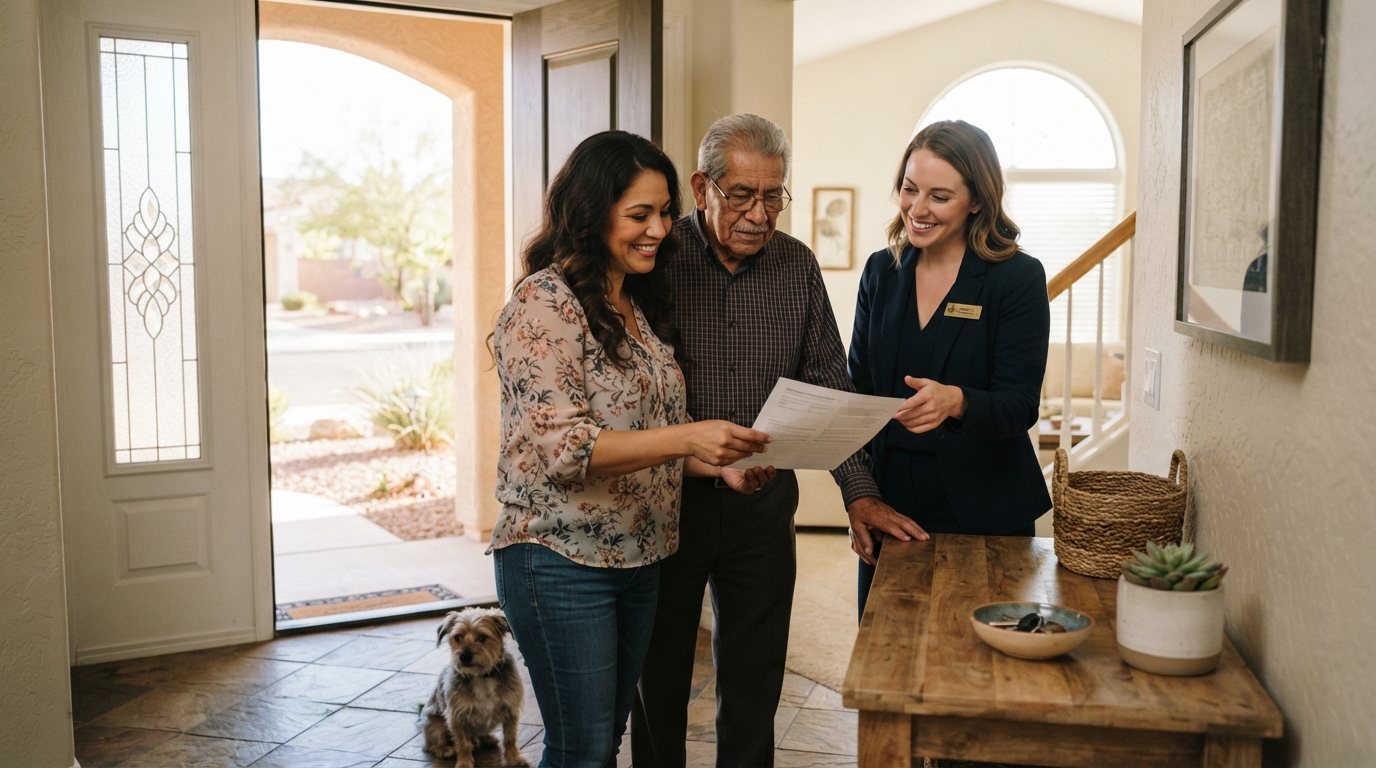
The right REALTOR serves as a neutral guide for both the parent and the adult child — never pushing, always informing.
I am honored to be the REALTOR families call for this conversation. My job is not to sell the house — it is to make sure your parent feels respected throughout the process, and that you have the information to make the right decision for your family.
Ready to Start the Conversation? Here Is Your Next Step
You do not have to have this all figured out before you reach out. In fact, the earlier we talk, the more options your family has. Whether you are just starting to think about it, your parent has asked a question, or you are ready to explore next steps — I am here to give you clear information, not a sales pitch.
I am happy to speak with you, your parent, or both together. No pressure, no pitch. Just a clear conversation from someone who has been in this room many times and understands what is at stake — for your parent and for your family.
You can also learn more about our senior home transition services or explore senior resources in Las Vegas.
About the Author
Steven D. Lockhart is a licensed Nevada REALTOR® (License #S.0194053) specializing in residential listings, buyer representation, and real estate solutions for life transitions including divorce, probate, and senior relocations. Based in Las Vegas, NV, he serves the greater Las Vegas Valley including Henderson, Summerlin, North Las Vegas, and surrounding communities. Learn more at stevelockhartrealtor.com.
Disclaimer: This post is for informational purposes only and does not constitute legal, financial, or tax advice. Estate planning, trust transfers, and reverse mortgages involve complex legal and financial considerations. Always consult with a licensed Nevada estate attorney, CPA, or financial advisor regarding your specific circumstances.
Related resources: Senior Home Transition Services, Senior Resources Guide, Selling an Inherited Home, Home Value Analysis, Schedule a Call

Steve Lockhart
Las Vegas Real Estate Strategist
Steve Lockhart spent nearly 30 years in MGM Resorts executive leadership, from the opening team of The Mirage to Director of Slot Operations at MGM National Harbor, before becoming a Las Vegas Realtor® in 2021. He built The Lockhart Method™ to bring that same high-stakes negotiation and leadership experience to real estate's toughest transitions: divorce, probate, senior downsizing, and distressed property sales.
Learn More About Steve